
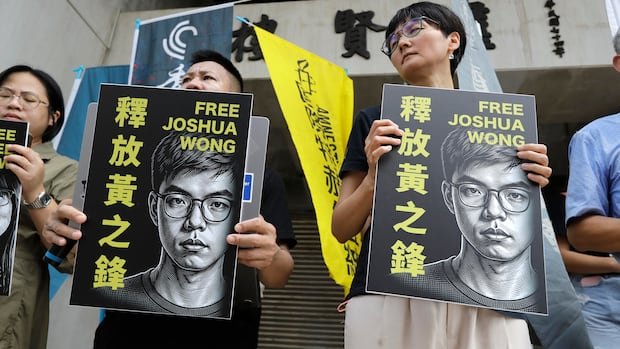

Hong Kong activist Joshua Wong admitted guilt on Wednesday to a charge of conspiring with foreign forces to endanger national security, a crime under a law imposed by Beijing that has stifled the city’s pro-democracy movement. This is Wong’s second prosecution under the national security law, which was introduced in 2020 following mass anti-government protests in Hong Kong.
Appearing in court in a blue shirt, Wong looked noticeably thinner as he entered his plea. A supporter encouraged him with a shout of “hang in there” before the hearing. Wong’s friend, Louis Lee, mentioned that Wong has been engaging in activities such as reading, studying, playing the guitar, and exercising while in prison. Lee expressed hope for Wong’s release and their continued dedication to their respective roles.
Wong is awaiting sentencing, with the offense carrying a potential prison term of three to 10 years, or even life imprisonment for serious cases. By pleading guilty, Wong may receive a reduced sentence. He is currently serving a sentence of four years and eight months after pleading guilty in another national security case related to an unofficial political primary.
Critics argue that Wong’s case highlights the government’s efforts to suppress dissent, which has had a chilling effect on civic activism. However, Beijing views Wong as an anti-China figure advocating for Hong Kong independence, a stance considered unacceptable by Chinese authorities.
Known for his activism since high school, Wong gained prominence during the 2014 Occupy Movement and later co-founded the political party “Demosisto” in 2016. The dissolution of Demosisto coincided with the enactment of the security law in 2020, which Beijing cited as crucial for Hong Kong’s stability. Numerous activists, including media mogul Jimmy Lai, have been imprisoned under this law, while some have sought refuge in democratic nations like the United States and the United Kingdom.
Wong, along with fellow activist Nathan Law, was accused of conspiring to solicit foreign entities to take actions against Hong Kong and China between July 1 and November 23, 2020. During the 2019 protests, Wong sought international support for the democracy movement, a move criticized by Beijing as inviting foreign interference.
Hong Kong authorities have issued rewards for information leading to the arrests of Law and other activists currently residing overseas, with Wong’s trial serving as a stark reminder of the challenges faced by pro-democracy advocates in Hong Kong.