
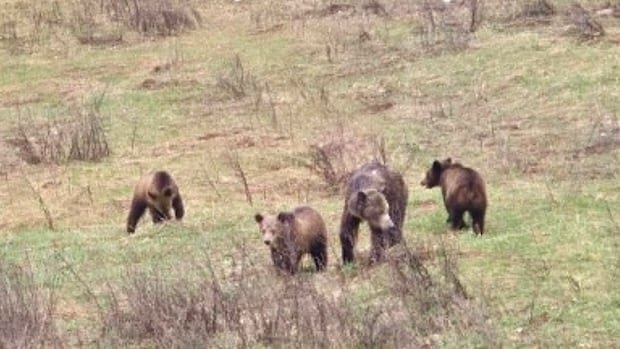

In an official statement released on August 14, the B.C. Conservation Officer Service confirmed the euthanization of a mother grizzly due to concerns over public safety. The decision was made as the bear displayed behavior indicating reliance on human food sources and a lack of fear towards people. The two remaining yearlings were relocated to an undisclosed area for continued monitoring.
A demonstration occurred in Nelson, B.C., protesting the killing of a young grizzly bear by the B.C. Conservation Officer Service. The bear was part of a group of grizzlies frequently sighted in and around Nelson.
Katie Graves, founder of the Ursa Project Society, described the emotional rally with attendees expressing sadness and solidarity. The society revealed that the bear, a yearling with a leg injury or deformity, had been able to move, keep pace with its family, and feed adequately. Graves highlighted that many bears in the wild live with similar physical challenges.
The B.C. Conservation Officer Service defended their decision, citing the bear’s age, injury, and history of conflicts as factors influencing their choice not to rehabilitate or relocate the animal. The Service emphasized the difficulty of such decisions and the priority of public safety.
The incident has sparked significant community backlash, with many criticizing the killing of the grizzly bear. Suggestions were made for better management of garbage to deter bears and prevent such tragic outcomes. Wildlife biologist Clayton Lamb stressed the importance of reducing attractants in urban areas to minimize human-bear conflicts and protect wildlife.
Nelson city officials stated their commitment to preventing conflicts with bears through measures like bear-proof garbage cans and educational programs. Bylaw services are actively enforcing waste management regulations to address issues of unsecured garbage and attractants attracting bears.