
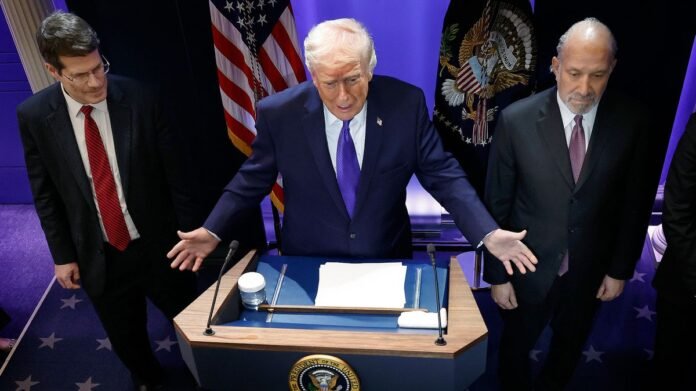

Donald Trump had an opportunity presented by the Supreme Court, but he chose to reject it during a lengthy and petulant televised outburst. The Supreme Court’s ruling against his tariffs could have been advantageous for his presidency, offering a chance to abandon a policy disliked by Americans. Instead of accepting this decision, Trump is exploring various loopholes to maintain his tariffs, thus keeping retail prices high. This contradicts his administration’s focus on addressing the cost of living and “affordability” before the midterms, showcasing a risky strategy. By persisting with the tariffs, Trump is providing struggling American families a target to blame for increased prices.
In a dramatic turn of events, Trump expressed his disappointment with the court’s decision, criticizing certain members and praising those who supported him. He accused the justices of lacking courage and being influenced by political correctness, which he deemed nonsensical. Trump’s remarks targeted specific justices, including Gorsich and Barrett, whom he appointed, questioning their actions and integrity.
During a press conference, Trump boasted about his reading abilities and comprehension skills, emphasizing how he believed the court ruling favored his position. He recounted an encounter with a steel plant owner who allegedly praised his tariff policies, attributing the success to the tariffs’ positive impact on the business. Trump also mentioned his restrained approach to imposing tariffs on various countries, claiming he aimed to comply with legal procedures.
Despite his discontent with the Supreme Court’s decision, Trump hinted at alternative strategies to regulate trade and impose tariffs within legal boundaries. He highlighted potential avenues for increased revenue and protection for American companies using existing trade laws. Trump’s statements suggested a belief that the court ruling reinforced his authority over trade regulations.
Although Trump expressed confidence in the future impact of the court ruling, uncertainties remain regarding potential legal challenges and trade disputes. Trump lamented restrictions on levying taxes under the court ruling, emphasizing his ability to disrupt trade with other countries without imposing charges. His comments reflected frustration over perceived limitations on his authority to enact financial penalties while retaining the power to disrupt international trade agreements.
Despite Trump’s assertions and reactions to the Supreme Court ruling, the implications of his continued tariff policies and the legal constraints he faces remain subjects of debate and uncertainty.