
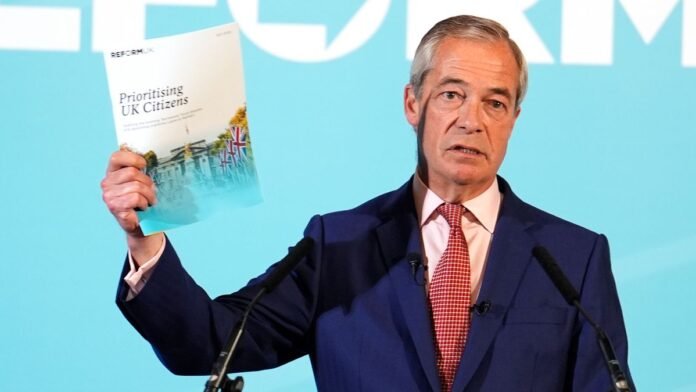

Nigel Farage revealed a plan to tighten restrictions on migrants’ rights and benefits claims. If his party, Reform UK, gains power, he aims to eliminate indefinite leave to remain. This move targets migrants who arrived under the relaxed post-Brexit rules known as the “Boriswave.” The party projects that by 2030, about 800,000 new migrants will acquire indefinite leave to remain, a key step towards citizenship.
Indefinite leave to remain grants migrants the freedom to work, live, study, and potentially seek citizenship in the UK. However, Reform UK intends to replace this status with renewable visas lasting five years. These new visas will have higher salary requirements, stricter English language proficiency criteria, and exclude beneficiaries from claiming certain benefits.
Farage clarified that existing UK citizens, including those who have obtained citizenship, will not face retroactive changes. He emphasized that the proposed changes will save UK taxpayers an estimated £234 billion. Despite doubts about these figures, Farage defended the savings during a recent press conference.
Reform UK’s plan also involves restricting welfare benefits to UK citizens only, excluding foreign nationals. However, there may be exceptions for EU nationals with settled status, particularly regarding Universal Credit. Government sources highlighted that a significant number of Universal Credit claims from foreign nationals with EU settled status could challenge Reform UK’s benefit restrictions.
The party’s policy chief hinted at significant revisions to the salary threshold for the new visas but provided no specific details. Additionally, uncertainties persist regarding the impact on public services like the NHS and care sector, which heavily rely on migrant workers. Reform UK suggested implementing an ‘acute skills shortage visa’ for care workers, with capped numbers and potential employer-funded training programs for British workers.