
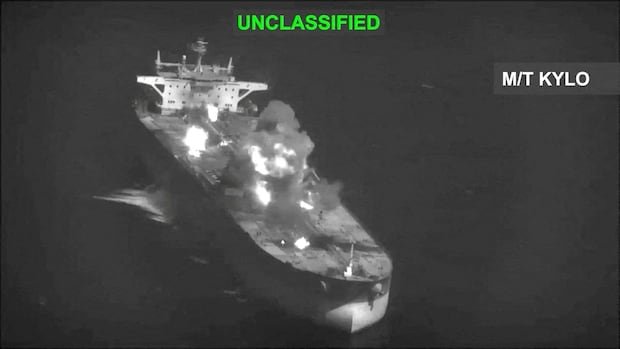

The U.S. military confirmed that they conducted strikes on three Iranian oil tankers in response to ballistic missile attacks on Navy warships. This move was described as a potential threat to Iran’s oil fleet. The escalation was deemed risky by experts, especially following Iran’s previous assaults on commercial ships.
The recent strikes signal a return to conflict after a period of intermittent war actions that began with U.S. and Israeli strikes on Iran in February. Both sides have aimed to impose military and economic pressure, leading to failed negotiations.
According to the military statement, U.S. forces evaded unprovoked Iranian attacks on an aircraft carrier and a destroyer in the region, resulting in no injuries to U.S. personnel. The statement indicated that two Iranian oil tankers were disabled permanently, while a third unladen tanker was destroyed.
Iran retaliated by reportedly targeting three American vessels in response to the U.S. strikes, as claimed by Iran’s state broadcaster. The possibility of these actions was not immediately verified. A spokesperson from Iran’s joint military command warned of heightened retaliation against U.S. military ships if interference with Iranian shipping persists.
The attacks occurred shortly after a week of resumed hostilities between the U.S. and Iran, with strikes targeting the Strait of Hormuz and Iranian territories. The U.S. military emphasized its readiness to defend American forces and dismantle Iran’s exposed oil fleet if necessary.
Iran condemned the strikes as war crimes and held Washington and its allies responsible for any repercussions resulting from continued U.S. aggression and economic warfare. The ongoing conflict has raised concerns about the safety of Iranian oil tankers amid the U.S. blockade of Iranian ports.
The recent confrontations followed renewed U.S. efforts to exert economic pressure on Iran, despite calls from Iran’s elected government for a diplomatic resolution to the conflict. Tehran has navigated past sanctions and blockades to ensure oil exports, relying on a clandestine network to sustain its operations.
As diplomatic efforts faltered, discussions on Iran’s nuclear program deteriorated, with Western powers considering referring Iran to the U.N. Security Council for noncompliance with nuclear nonproliferation agreements. Iran’s strategic focus has shifted to the vital Strait of Hormuz, a crucial route for global energy shipments, amplifying tensions in the region.