
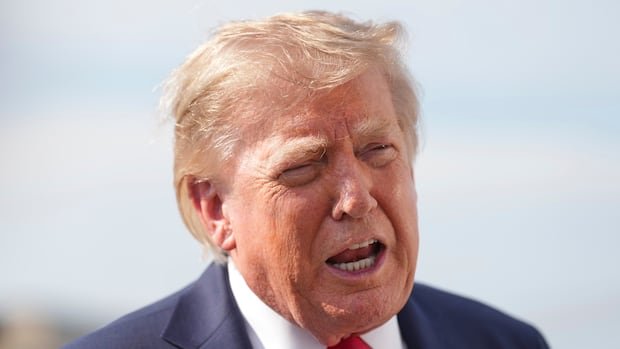

U.S. President Donald Trump has accused Canada of seeking the benefits of being a U.S. state without officially becoming one. Trump made these remarks on his Truth Social platform following the breakdown of trade talks and the implementation of new U.S. tariffs against Canada.
According to Trump, Canada has been imposing significant tariffs on American farmers for an extended period, a practice he vowed to end. The Canadian government has yet to respond to Trump’s statements, who has previously expressed his desire for Canada to become the 51st state of the U.S.
In response to failed negotiations, Canada faced 50% tariffs on various goods, as talks aimed at securing a trade agreement collapsed. Canadian Prime Minister Mark Carney criticized the U.S. administration for making unreasonable demands that hindered progress in the negotiations.
Carney announced that Canada would retaliate with equivalent tariffs on U.S. products, starting on September 8. The Trump administration’s new policy involves imposing 50% tariffs on goods totaling over $28 billion, spanning items like plywood, cement, wine, and hockey sticks.
Despite the trade tensions, provincial and territorial premiers have supported Carney’s decision to walk away from the negotiations. Ontario Premier Doug Ford expressed relief that the deal was not signed, emphasizing the need to combat tariffs with equal measures.
U.S. Trade Representative Jamieson Greer stated that there are no plans for further talks with Canada, emphasizing the U.S.’s focus on protecting its workers and supply chains. Greer mentioned that the U.S. offered concessions on steel, automobiles, and lumber, which Canada declined.
Amidst the dispute, Jamie Gillies from St. Thomas University noted that there is room for both countries to return to negotiations, with Canada scheduled to impose tariffs in early September. Gillies suggested that the U.S. administration is under pressure to secure a trade victory, especially with rising living costs ahead of the upcoming midterm elections.