
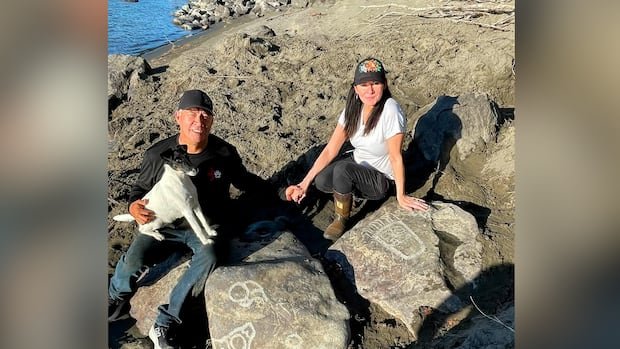

Rick and Jeanie McLean, a married couple and members of the Tahltan Nation, stumbled upon significant historical artifacts during a leisure trip to the beach. The stones they uncovered at Shakes Creek in northern B.C. bear intricate carvings depicting symbols related to the histories, treaties, and diplomacy between neighboring nations.
Rick, a former chief of the Tahltan Nation, and Jeanie, a former Yukon cabinet minister, were exploring their favorite spot when they noticed rocks adorned with carvings such as fish and what appeared to be a shield within a bear paw. This discovery sparked a sense of wonder and reflection for the couple, prompting thoughts about the individuals who created these carvings and the passage of time.
Growing up in the Telegraph Creek area, Rick had heard of one marked rock and suspected the presence of others. He emphasized the cultural significance of the area for both the Tahltan and Tlingit nations, recounting stories passed down from his great-grandmother about the land, conflicts, and the treaty signed at Shakes Creek.
The McLeans expressed the importance of such findings in igniting discussions about culture and history that transcend boundaries. They shared their excitement about the attention their discovery has garnered on social media, attracting interest from universities and a clan leader in Alaska.
Richard Jackson, chief of the Tahltan Band Council, acknowledged the presence of petroglyphs near Telegraph Creek but highlighted the novelty of finding them in the Shakes Creek area. Jackson elaborated that while the petroglyphs may not be of Tahltan origin, they hold significance for the Tlingit as part of a historic peace treaty and a marker for fishing areas.
Jackson stressed the need for respecting the cultural value of these stones and urged against disturbing them despite the newfound attention. CBC News reached out to the Taku River Tlingit First Nation in Atlin, B.C., for insights on the historical significance of the petroglyphs, with the nation’s communications department indicating a need to consult elders and knowledge holders before providing further details.