
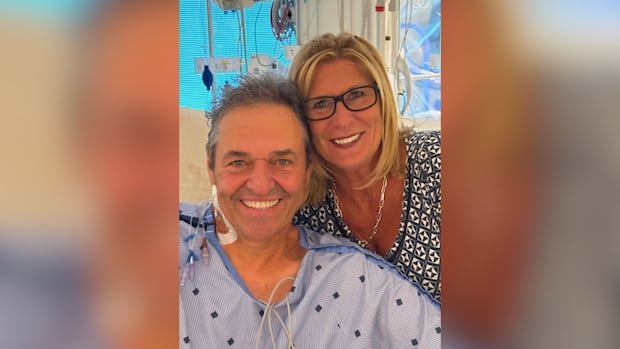

A 64-year-old man from Quebec has made history in North America by receiving a regenerated liver, marking a significant milestone in the field of organ transplants. Gérard Landry, a resident of Nouvelle in Quebec, had been battling liver issues for 15 years, leading to cirrhosis and liver cancer. Just before his liver transplant surgery, Landry was informed that his new liver had been regenerated by an innovative machine at Montreal’s Centre hospitalier de l’Université de Montréal (CHUM).
The revolutionary technology, known as Liver Assist, allows doctors to treat and evaluate donated livers outside the body before transplantation, potentially expanding the pool of viable organs for transplant recipients. Dr. David Hénault, a specialist in liver transplants at CHUM, led the team that performed Landry’s operation, utilizing the Liver Assist system to rejuvenate the donated liver.
The machine functions by connecting the liver to a device that circulates oxygen-rich fluid through the organ, aiding in reversing damage caused by oxygen deprivation during the organ preservation process. This approach enables medical professionals to switch to a blood-based solution to assess the liver’s functionality in conditions mimicking the human body.
The application of this technology has the potential to significantly increase the number of available livers for transplantation, with estimates suggesting that it could add 20 to 24 additional livers for transplant in the first year of implementation at CHUM. Dr. Hénault highlighted the positive impact of this advancement, emphasizing the potential to help more patients awaiting life-saving liver transplants.
In Landry’s case, the successful transplant was evident shortly after the surgery, with post-operative tests showing promising results. Hénault attributed the positive outcomes to the innovative technology, underscoring its role in enhancing patient recovery and reducing complications associated with liver transplants.
As Landry continues his recovery in Montreal, with regular follow-up appointments for monitoring, he looks forward to returning to Gaspésie to reunite with his family, horses, and friends. His experience serves as a testament to the importance of organ donation and the transformative potential of cutting-edge medical technologies in saving lives and improving patient outcomes.