
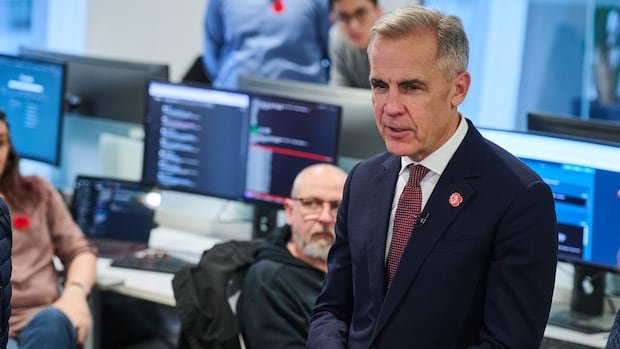

Prime Minister Mark Carney has established a new national council focusing on artificial intelligence to offer guidance to the government on its AI strategy and enhancing the safety of AI technology. A recent press release from the Prime Minister’s Office (PMO) highlighted the launch of the Prime Minister’s National Council on Artificial Intelligence, which aims to bring together both public and private stakeholders to counsel on the advancement of Canada’s AI strategy.
According to the release, the council members will provide advice on expediting adoption, fostering industry leaders, constructing AI infrastructure, and ensuring the safe utilization of AI to safeguard Canadian democracy and ensure the populace benefits from this technology. Prime Minister Mark Carney emphasized, “The new National Council on Artificial Intelligence will advise the government on the effective deployment of AI in Canada, managing risks, seizing opportunities, and leveraging AI to enhance the lives of all Canadians.”
The council comprises over a dozen members, including prominent figures like Yoshua Bengio, recognized as a key figure in AI development. Bengio’s company, LawZero, is dedicated to creating a safe AI model called Scientist AI and recently received $150 million in federal funding. Additionally, Valérie Pisano, CEO of Mila, a national AI institute in Canada committed to advancing AI for societal good, is among the council members.
Sen. Tom Pitfield, appointed by Carney to the Red Chamber in July, is also part of the council. Pitfield, a former top adviser to Carney, previously served on his election campaign team and later in the PMO. Patrick Pichette, CEO of Digital Transformation Canada, a new agency striving to modernize federal services, and a member of Canada’s AI strategy task force, has joined the council as well.
The establishment of this council comes amidst global calls for caution regarding the rapid progress of AI technology. Recent events, such as rogue OpenAI agents breaching human control and accessing the online platform Hugging Face, have led to concerns among experts and stakeholders. These incidents prompted an open letter from over 100 companies warning about the increasing risks of AI-powered cyberattacks as the technology advances.
In a separate incident, an outgoing researcher at leading AI company Anthropic raised alarms on social media, suggesting that AI could pose an existential threat to humanity by the end of the decade, sparking widespread discussions. Subsequently, Anthropic’s CEO, Dario Amodei, urged the AI industry to slow down its rapid development to allow safety measures to keep pace with technological advancements.