
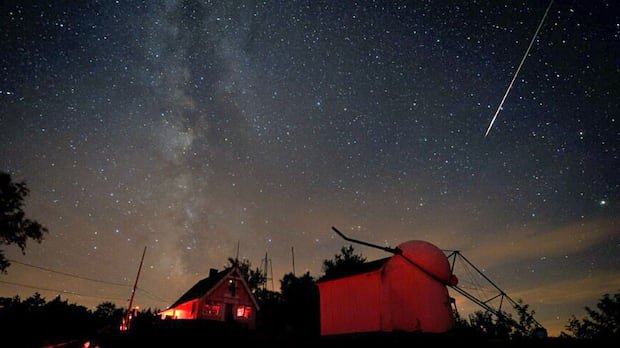

Every August brings the highly anticipated Perseid meteor shower, renowned for its abundance and brilliance. This year, the peak night coincides with a partial solar eclipse, adding to the celestial spectacle.
The Perseids are considered among the top meteor showers due to their high meteor count and luminosity, coupled with typically favorable viewing conditions. The optimal time to witness this celestial event is on Aug. 12-13, aligning with a new moon phase, ensuring an unobstructed view of the meteors.
Peter Brown, a meteor astronomer at Western University, anticipates a notable presence of Earth-grazing meteors, which are meteors that enter the atmosphere and then exit back into space, known for their brightness and speed.
The meteor shower is projected to peak around midnight Eastern Daylight Time, potentially offering up to 120 meteors per hour, though actual visibility may vary based on viewing conditions. It is recommended to seek a dark-sky location for optimal viewing and to avoid phone usage to allow eyes to adjust to the darkness.
In addition to the Perseids, other meteor showers like the southern delta Aquariids and the alpha Capricornids are active, enhancing the chances of catching a glimpse of a shooting star. The upcoming partial solar eclipse on Aug. 12 will be visible in select regions, with the moon appearing to take a small bite out of the sun.
For safe viewing of the partial solar eclipse, it is crucial to use approved solar eclipse glasses to protect the eyes. Astronomers highlight the significance of this event in showcasing the intricate dance of celestial bodies, offering a humbling perspective on the cosmos.