
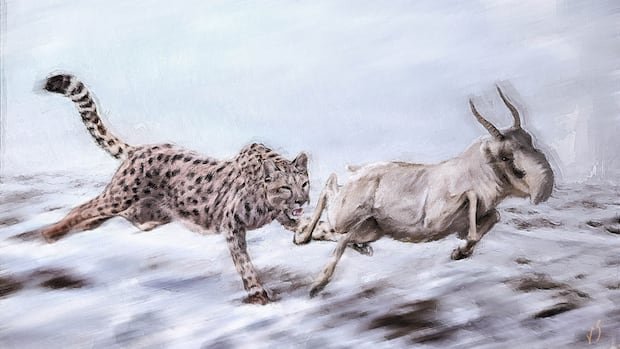

A recent discovery in the Bluefish Caves and at a mine site in northern Yukon initially suggested the presence of an ice-age puma or cougar. However, DNA analysis conducted by the University of California revealed a surprising twist. Molly Cassatt-Johnstone, a lab technician at the time, was astonished when her analysis of the Yukon bones indicated they were not pumas but cheetahs.
Grant Zazula, a Yukon paleontologist, vividly recalls the moment he received the unexpected message confirming that the so-called cougars were, in fact, cheetahs. This revelation marked a significant advancement in the field of ancient DNA analysis, which was once considered a realm of science fiction.
Cassatt-Johnstone’s groundbreaking identification of a Yukon Miracinonyx, the extinct American cheetah, led to her authorship of a paper in Current Biology. The study sheds new light on the ice-age cat’s dietary habits and habitat range.
Initially thought to be specialized predators of American pronghorn antelope in the lower 48, researchers were perplexed to find American cheetahs in the Arctic tundra, where pronghorns were absent. Beringia, the land connecting Asia and North America, including parts of Russia, Alaska, and the Yukon, served as a unique habitat for these creatures.
To unravel the mystery of how Miracinonyx thrived in such an environment, researchers employed stable isotope analysis. This method, akin to forensic investigations, provides insights into the diet, climate, and migration patterns of ancient species. Surprisingly, the analysis revealed that Yukon cheetahs primarily subsisted on fish, a behavior uncommon among past and present-day felines.
The study’s extensive DNA analysis indicated that Miracinonyx was genetically closer to North American pumas than African cheetahs. The low genetic diversity observed in the cheetah population may have contributed to their eventual extinction.
Julie Meachen, a paleontologist specializing in mammalian carnivores, highlighted the unique feeding behavior of Yukon cheetahs, attributing their success to the abundant salmon runs in the region. The study’s findings challenge previous assumptions about the species and underscore the importance of ongoing paleontological research in uncovering new narratives from ancient bones.
Grant Zazula proposed renaming the distinctive northern population from ‘American Cheetah’ to ‘Yukon Cheetah,’ emphasizing the significance of each bone discovery in revealing untold stories from the past.