
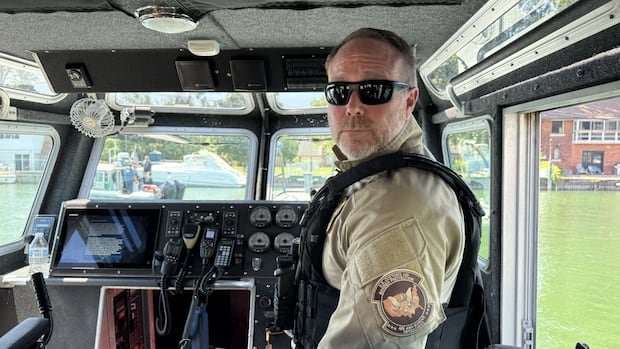

In a black bulletproof vest and with a firearm holstered, Tim Thayer smoothly engages the throttles of four 350-horsepower engines, propelling the 18,000-pound U.S. Customs and Border Protection boat into action on the Detroit River.
Thayer, a marine interdiction agent, is part of a team responsible for monitoring the water borders between Canada and the U.S. in this region. His duties cover the Detroit sector, which spans Michigan, Ohio, Indiana, and Illinois. The unique geographical layout of this area presents a challenge, as the entire Canada-U.S. border here consists of water, stretching 1,388 kilometers.
A distinctive aspect of the Canada-U.S. border in this region is that Windsor, Ontario, is located south of Detroit, separated by the river and linked by two bridges and a tunnel, facilitating the transit of approximately seven million individuals annually.
During a sunny Wednesday afternoon, Thayer scans the Windsor shoreline, vigilantly observing for any suspicious activities. His patrols on the Detroit River often reveal movements of people, drugs, and firearms between the two nations.
Historically, the Windsor-Detroit corridor was a key route for smugglers transporting alcohol into the U.S. during the Prohibition era. While illicit activities on the Detroit River have diminished, the large number of recreational boaters present a monitoring challenge for law enforcement agencies.
U.S. President Donald Trump’s claims of drug and human trafficking threats from Canada led to the imposition of tariffs in 2025, which were later overturned by the U.S. Supreme Court. Despite Trump’s assertions of porous borders, the reality is more complex and nuanced.
In 2025, U.S. border officials in the Detroit sector seized over 4,200 kilograms of illegal drugs, including nearly 15 kilograms of fentanyl. However, the direction of drug trafficking remains undisclosed in the provided statistics.
Furthermore, firearms are also flowing northward, with a significant percentage of guns recovered in crimes in Ontario traced back to the U.S. Law enforcement experts emphasize the need for enhanced border security measures and better-equipped personnel to address cross-border challenges effectively.
The working relationship between U.S. and Canadian border agencies remains robust, with agents emphasizing the importance of collaborative efforts despite ongoing political tensions. As Thayer watches an RCMP boat pass by, with the Gordie Howe bridge in view, the bond between the two nations is symbolized by both unity and strain.