
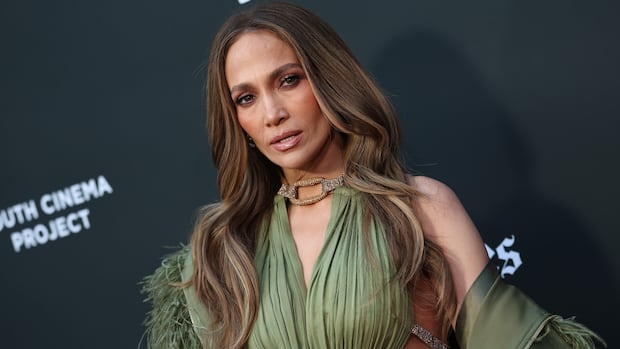

Jennifer Lopez reveals that she has received fewer acting opportunities in Hollywood than many might think, attributing part of this to her Latina heritage.
During a November 20 interview on the New York Times’ Popcast podcast, the Puerto Rican star stated, “From the start of my career, I got offered roles, but the options were quite limited.”
“I had to essentially create my own opportunities.”
Lopez noted that she didn’t conform to the typical image of “a white actress,” mentioning that while casting has become more varied over time, actors may still need to forge their own paths.
-
Jennifer Lopez and Shakira vow ’empowering’ Super Bowl halftime show
-
Jennifer Lopez files for divorce from Ben Affleck
Her statements sparked backlash on social media, with some users highlighting her successful career and extensive film roles as counterarguments to her claims.
Adrianne Curry-Rhode, a former contestant on America’s Next Top Model, described Lopez’s comments as “next-level delusion” and criticized her acting skills. Other commenters echoed this sentiment, suggesting that her performances, rather than her ethnicity, could explain the lack of certain roles.
In a response to CBC News, a representative for Lopez clarified that her remarks were meant to reflect experiences from the 1990s and early 2000s, noting that other Latino actors have shared similar experiences, including John Leguizamo, Michael Peña, and Eva Longoria.
Indeed, other actors from diverse backgrounds have voiced similar concerns regarding the availability of significant roles. Toronto-based pop culture critic Rachel Ho, who has observed Lopez’s career since the late 1990s, acknowledges that while Lopez is a diligent performer often overlooked, her visibility and variety of roles might make it challenging for audiences to grasp the limitations she describes.
“She must have encountered a considerable amount of discrimination that we might not fully understand, and she has undoubtedly worked hard to achieve her current status,” Ho stated to CBC News.
“However, I believe she should be more aware of her privileges, even as a woman of color, within the Hollywood landscape.”
A career spanning film and music
Lopez’s breakthrough performance occurred in Selena (1997), where she played the role of Tejano singer Selena Quintanilla. She subsequently appeared in Steven Soderbergh’s Out of Sight (1998) alongside George Clooney, and in romantic comedies like The Wedding Planner (2001) with Matthew McConaughey and Maid in Manhattan (2002) with Ralph Fiennes.
Additionally, she has made significant strides in her music career, releasing On the 6 in 1999 and J.Lo in 2001.
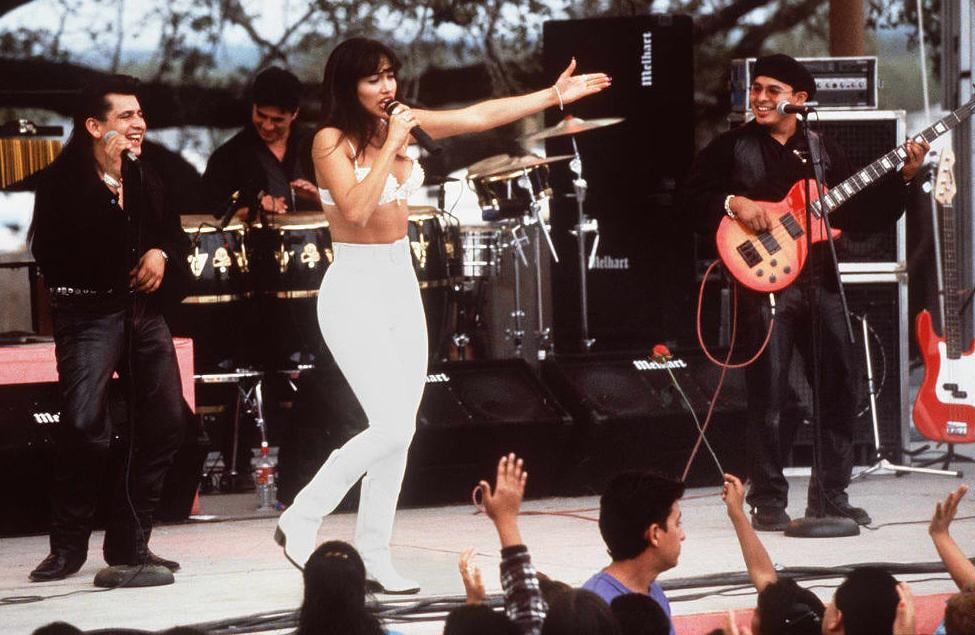
In her breakthrough role, Jennifer Lopez plays the titular character Selena in the 1997 biopic about the Tejano singer. (Ricco Torres/AFP/Getty Images)
Ho noted that Lopez’s achievements were significantly influenced by her ability to navigate both acting and music during a time when many Latino artists were gaining mainstream recognition. She referred to this era as a “Latin explosion,” placing Lopez alongside Marc Anthony, Ricky Martin, and Enrique Iglesias.
She also pointed out that Lopez has portrayed characters whose ethnic backgrounds were not central to the story, making it easier for studios to consider casting a Latino actor compared to those whose cultural identity is crucial to the role. Furthermore, Ho highlighted that Lopez’s appearance allows her to be cast in roles not specifically written for a Latina.
Other actors describe barriers
Actors from various backgrounds have also raised questions about whether achieving success ensures access to substantial roles. Mahershala Ali, a two-time Oscar winner, addressed the topic on the podcast 7PM in Brooklyn with Carmelo Anthony, where he remarked that a Black actor winning an Oscar doesn’t necessarily lead to a steady stream of quality roles.
“There are more talented actors than there is good material,” he stated.
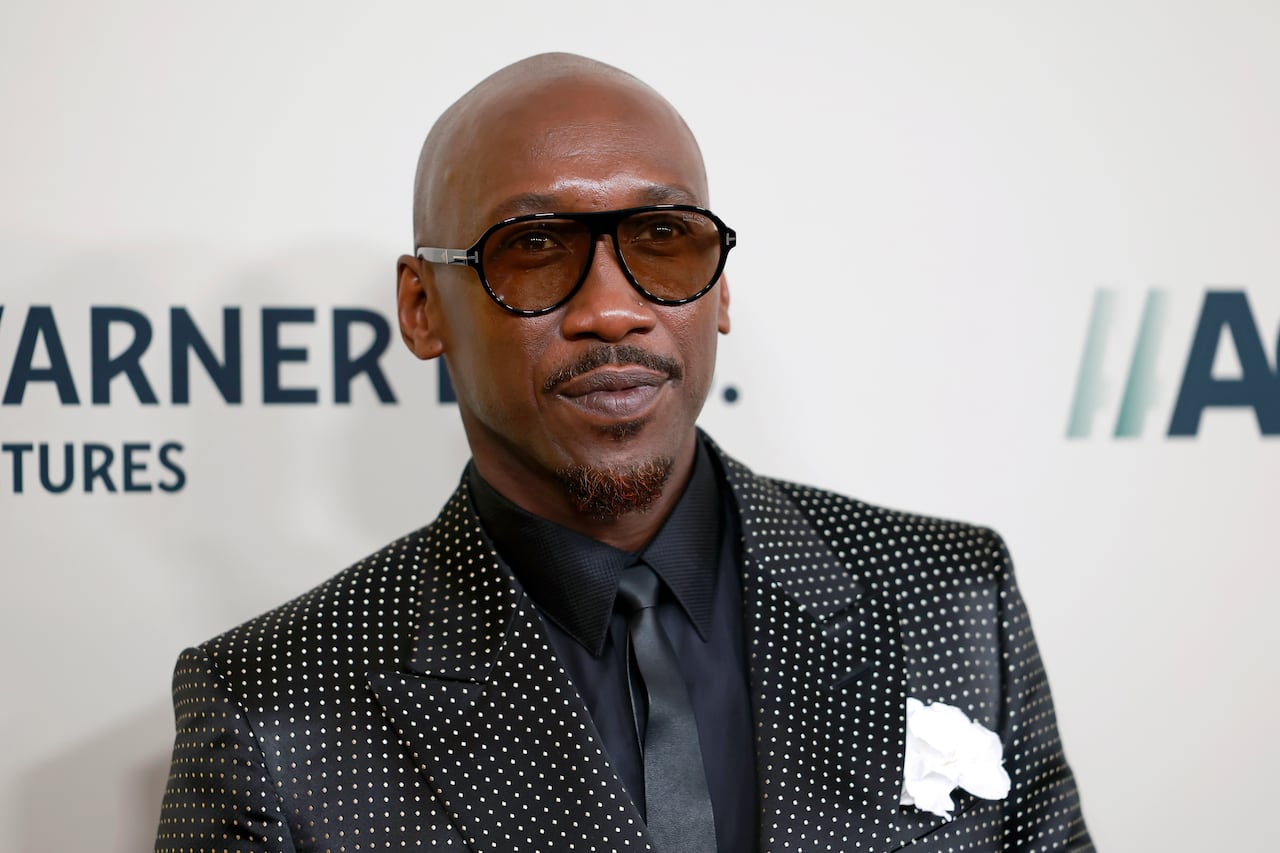
Actor Mahershala Ali poses for photographers at an event in Beverly Hills in 2025. (Frazer Harrison/Getty Images)
Halle Berry, who made history as the first Black woman to win the Oscar for best actress in 2002 for her performance in Monster’s Ball, recently discussed the intersection of race and casting. In a recent interview with the Cut, she shared that she anticipated a flood of scripts following her win, but recalled directors expressing concerns about how casting a Black woman might impact a film’s narrative and its marketability abroad.
Ho suggested that Lopez’s remarks might seem out of touch when considered in light of her fame and the numerous roles she has landed. She reflected on Lopez’s prominence in the early 2000s and mentioned that she wouldn’t label the actress as struggling in the traditional sense. Nonetheless, she warned against ignoring the possibility that Lopez encountered discrimination or had to navigate limited options.
“I find her to be a captivating celebrity,” Ho remarked. “I genuinely admire her, but… at this stage in her career, perhaps due to being in a bubble, she may not fully perceive the broader landscape around her.”