
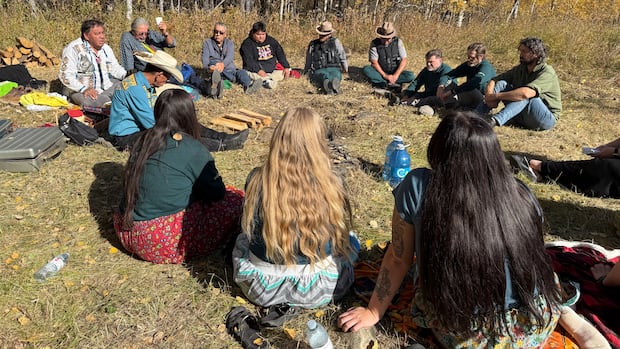

The remains of a Dene woman, referred to as Everyone’s Grandmother, were commemorated with a traditional ceremony on Tuesday in Prince Albert National Park.
“It’s quite exceptional and wonderful for Parks Canada to participate in this way. I can truly feel the kindness in this gesture,” expressed Jake Felix, an elder from the Sturgeon Lake Cree Nation.
A traditional sweat lodge ceremony, pipe ceremony, and feast took place in accordance with Cree and Dene burial customs. Community members, along with First Nations elders and representatives from Parks Canada, participated in these ceremonies.
This event is part of an ongoing dialogue between the local communities and the park to explore ways to celebrate Indigenous history and culture.
“I believe Parks Canada made a significant step by holding this ceremony and following the appropriate protocols,” Felix stated, who has been involved with the Everyone’s Grandmother initiative since the remains were found in the Anglin Lake region of Saskatchewan during the 1990s. The remains were reinterred decades ago, but a special ceremony was organized at the park, by the shore of the lake, this week.
Researchers from the University of Saskatchewan identified the remains as belonging to a Dene woman in her late twenties, who likely passed away between 300 and 500 years ago.
Once it was confirmed that the remains were of a Dene woman, the First Nations community, through the Prince Albert Grand Council—previously known as the Prince Albert Tribal Council—was consulted regarding the next steps, according to Felix.
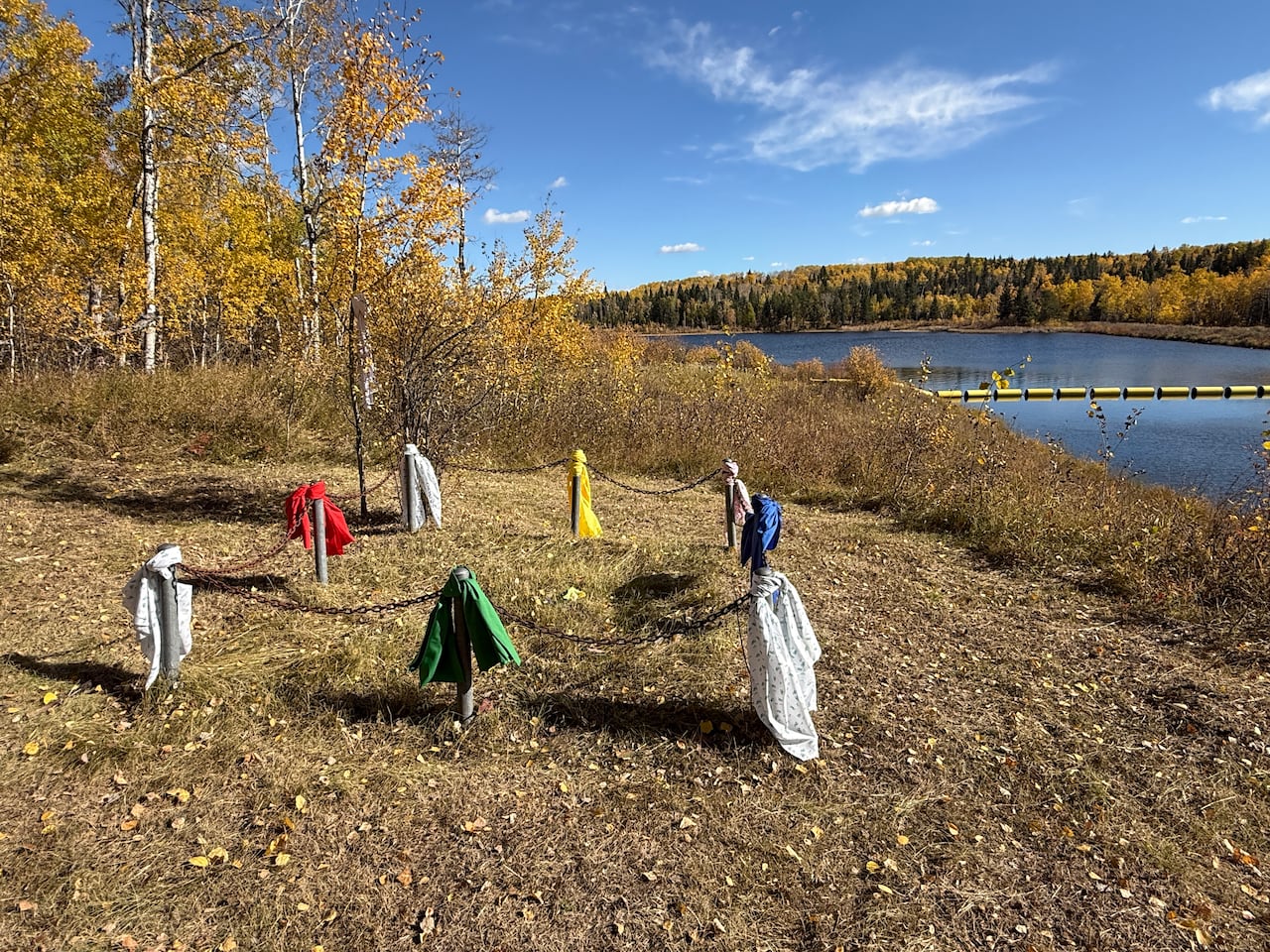
The burial site, located along the shore of Anglin Lake. (Lisa Risom/CBC)
The tribal council reached out to elders and leaders from the First Nations, who decided that the national park should serve as the final resting place for their ancestor.
“She was discovered not far from this location, but the community preferred to place her remains in the park for their preservation,” stated Dene elder Allan Adam.
Adam, a pipe carrier from the Fond du Lac Denesuline First Nation in northern Saskatchewan, led the pipe ceremony at the gravesite.
He expressed a desire to see a panel installed at the site to explain the significance of the remains and the connection of the Denesuline people to the land. He noted that this ancestral finding further supports the notion that the Dene migrated from north to south in search of hunting and gathering opportunities.
“We have used this land as well; we have utilized it for many thousands of years,” Adam remarked.
Engagement and collaboration
According to Indigenous cultural liaison Quinn Frank, Parks Canada collaborates with local residents to inform its initiatives and decision-making processes.
This effort aligns with the federal agency’s mission to honor Indigenous connections and uphold their rights.
<p“As an Indigenous individual working for Parks Canada, this is a powerful example of two worlds merging and illustrates the principles of truth and reconciliation,” Frank added.
The park is in the initial stages of formulating long-term strategies for the preservation of cultural sites.
Cultural sites are addressed individually, with decisions made under the guidance of elders and leaders from First Nations and Métis communities, Frank noted.
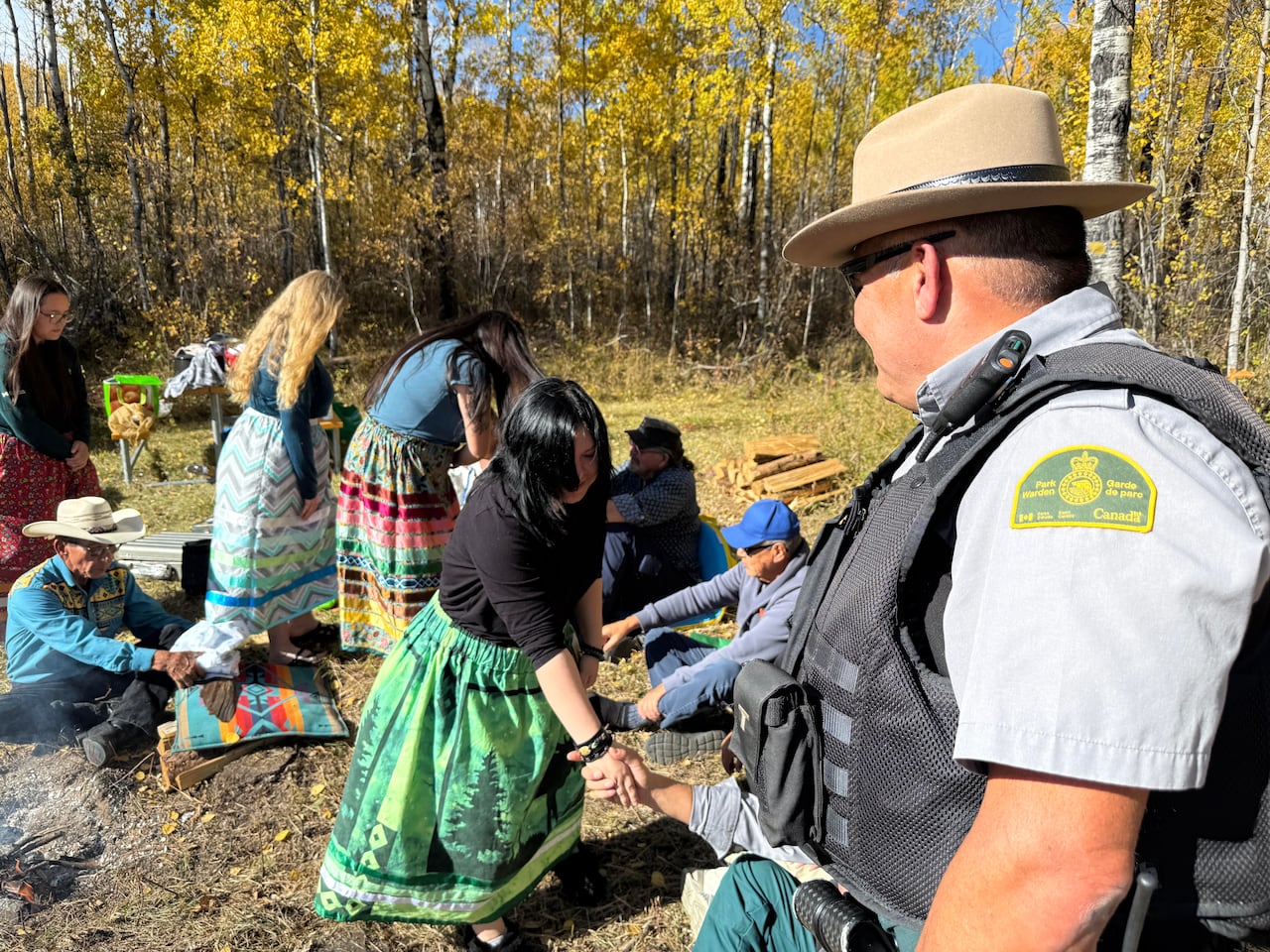
Parks Canada collaborates with Indigenous communities to shape its work and decision-making processes, says Indigenous cultural liaison Quinn Frank. (Lisa Risom/CBC)
“While we recognize that much work remains, it is crucial to continue building on the progress that has been made and to acknowledge the contributions of Indigenous peoples both before and after the establishment of the park.”
Since the park’s inception in 1927 on the ancestral lands of the Plains Cree, Woodland Cree, Saulteaux, Nakota, Dakota, Lakota, Denesuline, and Métis, other cultural sites may also exist within its boundaries.
As a Dene spiritual leader, Adam invites those interested in the cultural and historical importance of the site to visit the Everyone’s Grandmother gravesite. However, he emphasized the necessity of notifying the park regarding plans for ceremonies and visits to this remote location.
Felix concurred, stating that the First Nations tradition involves laying down tobacco and offering a prayer when visiting a gravesite.
According to Parks Canada, partnerships and collaborations with First Nations, Inuit, and Métis governments, communities, and organizations are essential for the agency to fulfill its mission of safeguarding and showcasing natural and cultural heritage in Canada.