
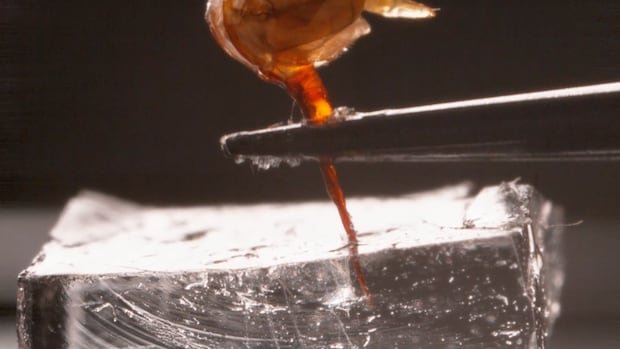

A western honey bee’s stinger is a final defense tool meant to pierce and inject venom into the target, often resulting in the bee’s demise. Recent research in the Proceedings of the National Academy of Sciences sheds light on the effectiveness of this mechanism. Fiorella Ramirez Esquivel, a postdoctoral researcher at Macquarie University, Australia, highlighted the novelty of filming bee stingers in action thanks to modern camera technology.
Using high-speed cameras capable of capturing hundreds of frames per second, Ramirez Esquivel and her team observed the intricate process of bee stingers penetrating objects. The experiments involved live honey bees, where stingers were removed and immediately used on artificial skin substitutes due to their limited activity time once detached from the bee’s body.
The study revealed a double-piston design in the bee stinger, with specialized valves facilitating both deeper penetration and continuous venom delivery. The complex system was likened to a car engine but with a more intricate mechanism involving two moving valves that allow fluid flow. The researchers utilized 3D printing to replicate the valve movements for a better understanding of the process.
Juliana Rangel, an apiculture professor at Texas A&M University, expressed fascination with the research findings, emphasizing the importance of understanding how venom is continuously pumped post-stinging. The study also noted that bee stingers could exhibit movements for up to 15 minutes after deployment.
The defense mechanism, known as autotomy, where the bee leaves part of its body behind, serves as a crucial tactic for the western honey bee’s survival. The stinging apparatus and the evolution of the bee’s defense mechanism are considered an insurance policy for protecting the larger colony. Honey bee stingers release pheromones to signal other bees to join in defense against threats.
Despite the efficiency of bee stingers, their effectiveness can vary against tougher targets. The barbed design and continuous penetration enhance the chances of deterring attackers. The study’s insights could have potential medical applications due to the unique pumping mechanism of bee stingers, offering opportunities for further research and discoveries.
The long history of western honey bees, which have been studied for centuries, raises intriguing questions about their unique adaptations compared to other honey-producing bee species globally. The study’s use of advanced videography has unveiled new aspects of bee stingers, paving the way for deeper insights into these fascinating creatures.