
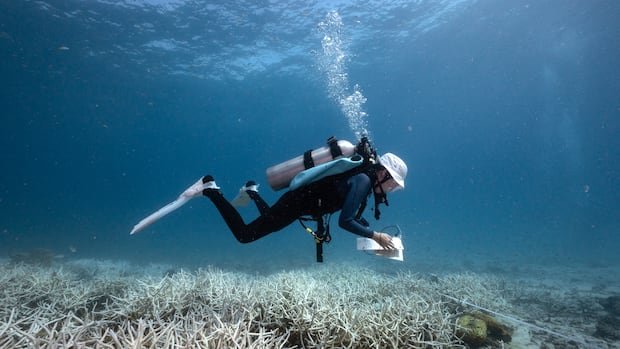

A recent global report reveals a significant decline in the proportion of living, stony hard corals on reefs worldwide. The report highlights the impact of marine heatwaves and global bleaching events on coral reefs, attributing the decline to climate change-induced heat stress. Hard coral coverage has dropped to approximately 25%, down from over 30-40% in the 1980s, indicating a concerning trend of coral loss and reduced recovery window due to more frequent extreme ocean heat events.
Researchers emphasize the urgent need for action as the rate of coral cover decline has accelerated to 9.5% in recent years. The report underscores the ongoing threat to coral reefs from climate change, particularly the heightened intensity and frequency of marine heatwaves. Despite the potential for corals to recover given time, the repeated occurrence of global bleaching events in the last 15 years poses a significant challenge to their resilience.
The report, based on data from nearly 37,000 reef sites, highlights uneven declines in different regions. While some areas show stable or growing coral cover, others, including Australia, the eastern Pacific, the Caribbean, and the Persian Gulf to the Arabian Sea region, have experienced significant declines. The report also points out the impact of human activities, such as greenhouse gas emissions leading to ocean warming, on coral health.
Experts stress the importance of sustained funding and standardized monitoring methods to enhance understanding of coral reef ecosystems on a global scale. They advocate for regional interventions like curbing overfishing and pollution to boost coral resilience. However, the ultimate solution lies in global action to reduce greenhouse gas emissions from fossil fuel burning, which is the primary driver of ocean warming and coral reef decline.
As El Niño events become more pronounced, researchers warn of the compounding effects of climate change on coral reefs. Recent studies indicate a historical increase in the intensity of El Niño events, as evidenced by coral geochemistry. This trend raises concerns about the future health of coral reefs in a warming world, underlining the need for immediate action to mitigate the threats facing these vital marine ecosystems.