
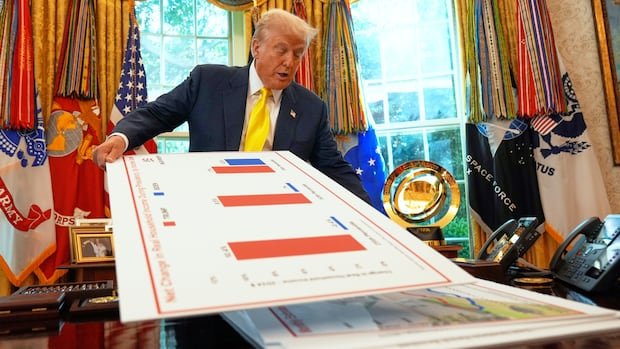

President Donald Trump, during his state of the union address in March 2025, expressed optimism about the economic benefits of tariffs, anticipating significant revenue generation and job creation. He had previously highlighted the potential of tariffs to reduce national debt and lower taxes for the American populace. However, the promised surge in job opportunities did not materialize, leading to a substantial increase in U.S. government debt, surpassing $40 trillion.
Despite the adverse impact of tariffs on some sectors of the economy, they have proven advantageous for certain entities, facilitating a wealth transfer from lower-income groups to affluent corporations, as stated by economists. The implementation of tariffs aligns with the broader economic agenda of the Trump administration and the Republican Party, focusing on tax policies that favor the wealthy.
Tariffs, being consumption-based taxes, disproportionately affect lower-income households compared to the affluent, creating an unequal financial burden. Additionally, the arbitrary nature of tariff exemptions and refunds has further exacerbated wealth concentration, with major corporations benefiting significantly.
The distribution of tariff refunds has favored prominent corporations, with Walmart and Target among the beneficiaries of substantial refunds, enhancing their financial standings. Conversely, smaller businesses and individual consumers have been left out of the rebate process, emphasizing the preferential treatment received by politically connected entities.
The economic impact of tariffs on consumers has resulted in price hikes, primarily borne by U.S. buyers, contrary to the initial promise of job creation and economic revitalization. Despite assurances from corporations to pass on refunds to consumers, economists remain skeptical about the trickle-down effect, emphasizing the disproportionate burden on buyers caused by tariffs.
The financial implications of Trump’s tariff policies reveal a widening wealth gap, as the benefits primarily accrue to the wealthy while middle-class Americans bear the brunt of the associated costs. The inadequate revenue generated by tariffs underscores the inefficiency of using them to offset tax cuts for the affluent, leading to escalating national debt and economic uncertainties. The adverse effects of tariffs call for a reassessment of revenue-generation strategies to foster a more equitable and sustainable economic environment.