
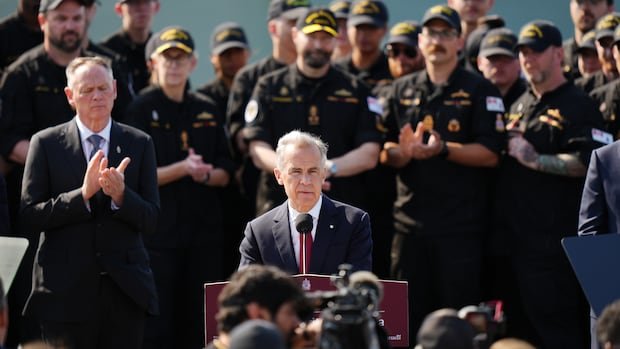

In a significant development, Canadian Prime Minister Mark Carney revealed that Canada is in talks to purchase a potential twelve submarines from German shipbuilder ThyssenKrupp Marine Systems (TKMS), concluding a fierce competition to replace Canada’s aging Victoria-Class submarine fleet. Both competing bids, one from South Korea partnered with Hanwha Ocean and the other from Germany and Norway with TKMS, included commitments beyond submarine procurement, promising substantial investments in Canada’s economy.
TKMS proposed delivering four Type 212CD submarines to the Royal Canadian Navy by 2036, aiming to have the first one ready by 2034. This closely matched the South Korean bid, which also offered to supply four submarines by 2035, aligning with the retirement schedule of Canada’s existing Victoria-Class submarines. Carney emphasized the difficulty of choosing between the two highly qualified suppliers, ultimately selecting TKMS and initiating negotiations for up to twelve submarines.
Under the deal, TKMS is required to ensure that the full value of Canada’s investment is matched by economic benefits to the country. Carney highlighted that TKMS’s investments across defense and industrial sectors, including space, munitions, autonomous technology, critical minerals, and research and development (R&D), are expected to amount to tens of billions of dollars. The project is projected to generate over 100,000 well-paying jobs in various fields such as welding, engineering, machining, and research.
The German bid aligns with several of Canada’s economic objectives, including the goal of increasing LNG production to 50 million tonnes annually by 2030. TKMS proposed establishing a maintenance facility and manufacturing centers in Canada, including plans to utilize Manitoba’s Port of Churchill as an LNG and critical minerals export hub. Additionally, the Germans suggested collaborating with Alberta on a carbon capture facility using TKMS technology.
The selected TKMS platform is designed for Arctic waters and is fully interoperable with NATO forces, enhancing Canada’s ties with the alliance. Carney emphasized that the deal with Germany does not signal a shift away from Canada’s Indo-Pacific strategy. While TKMS has been chosen as the primary supplier, Hanwha remains the backup option if negotiations with TKMS falter.
Carney highlighted the potential economic benefits for Canada’s coasts, particularly in Halifax and on the West Coast, stemming from shipbuilding and maintenance activities related to the German and Norwegian submarine contract. He emphasized that this deal marks the beginning of substantial economic activity that will extend throughout Canada.