
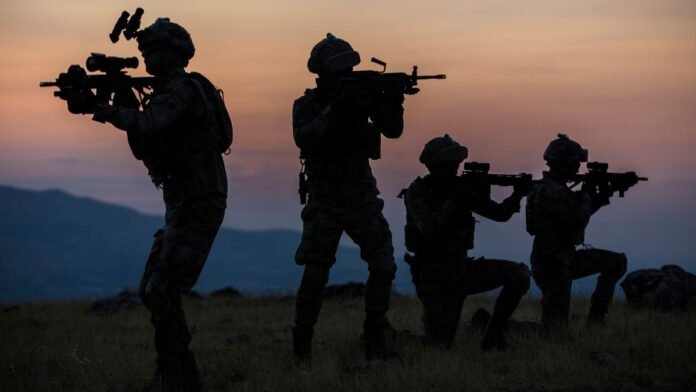

A colleague was nearly fatally shot by a special forces soldier at close range, sustaining seven gunshot wounds. The incident occurred during a training exercise in Wiltshire, where live ammunition was mistakenly used instead of blanks, leading to severe injuries for Soldier A, who was hit in the chest and arms.
Soldier A, who suffered life-altering injuries and post-traumatic stress, was emotionally supported by Lieutenant Colonel Emma Whiting, who shared Soldier A’s statement in court. The victim emphasized the importance of wearing body armor, stating that it likely saved his life during the shooting incident.
The shooter, identified as Soldier B, acknowledged his negligence in reloading his weapon with the wrong ammunition in dim lighting conditions. Soldier B received a suspended prison sentence and was ordered to compensate Soldier A. The court highlighted multiple safety oversights that contributed to the unfortunate outcome.
During the court proceedings, it was revealed that the soldiers were part of a confidential unit conducting a hostage drill in January 2019. Soldier B, an experienced serviceman participating in his first training with the secretive unit, mistakenly loaded live rounds instead of blanks due to the similarity in appearance of the magazines.
Despite the well-lit area where the incident occurred, Soldier B failed to properly verify the ammunition type before reloading. The prosecutor noted that Soldier B, though unprepared for a shooting role, acted to protect his colleagues during the exercise, inadvertently causing severe harm to Soldier A.
Soldier A sustained significant injuries requiring extensive surgeries, with his arm and chest undergoing reconstruction. The impact of the incident on Soldier A’s life was described as profound, with ongoing repercussions. Soldier B expressed remorse and apologized to the victim while in hospital.
The court determined that the seven live rounds fired by Soldier B resulted in the most severe injuries, despite a total of 23 rounds being discharged during the exercise. The case shed light on the critical importance of proper ammunition handling and safety protocols in military training scenarios.