
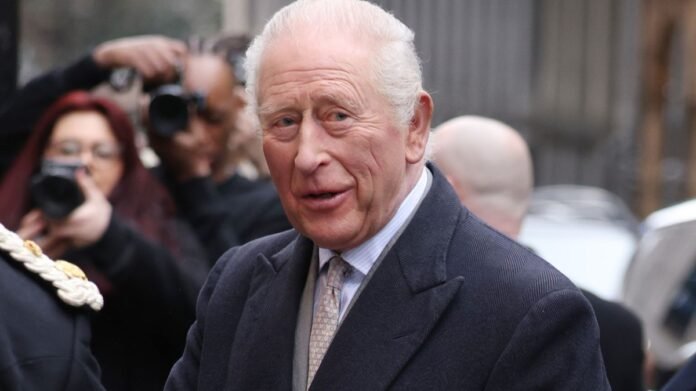

King Charles made a noteworthy appearance at London Fashion Week on Thursday, February 19, 2026, amidst heightened royal attention due to his brother’s recent arrest. Despite the circumstances, the King’s attendance carried a significant message, emphasizing the importance of continuity and support for both the monarchy and the British fashion industry.
While his presence was not geared towards setting trends or making a bold fashion statement, King Charles chose a classic ensemble for the occasion. Clad in a well-fitted grey suit paired with a slightly oversized black guard’s coat, he accessorized with his distinctive signet ring, a sentimental piece believed to have been gifted by the Duke of Windsor.
Acknowledged by the British Fashion Council, the King’s visit highlighted themes of craftsmanship, innovation, and sustainability, areas he has long advocated for within the industry. By engaging with British artisans and apprentices and exploring exhibitions focused on sustainable fashion practices, King Charles showcased his commitment to supporting the foundational aspects of the fashion sector.
This gesture underscores the broader significance of Fashion Week beyond its glamorous facade, emphasizing its role in providing employment, fostering creativity, and exerting global influence. The King’s front-row presence at the event’s opening underscored a message of endorsement for these fundamental aspects of the fashion world.
This occasion draws parallels to Queen Elizabeth II’s notable appearance at London Fashion Week in 2018, where she showcased her support for contemporary British design. King Charles’ participation today can be viewed as a continuation of this legacy, demonstrating solidarity with an industry facing challenges such as sustainability concerns and evolving consumer behaviors.
While this moment may not generate viral fashion trends, its impact lies in the symbolic backing it provides to the fashion community during a period of transition and change. Sometimes, the most powerful statements in fashion are not articulated through clothing choices but through the act of presence and support.