
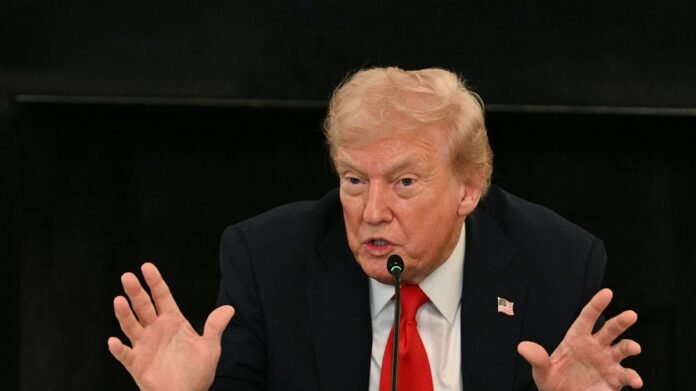

Donald Trump convened a meeting with far-right influencers where he labeled protesters against his administration as “terrorists.” The US President made unfounded accusations about violent protests in Chicago, Illinois, and Portland, Oregon, as part of his efforts to justify potential interventions in Democrat-run states he disapproves of.
During the meeting, Trump expressed concerns about alleged election rigging and criticized news outlets that portrayed him negatively, while receiving support from online personalities aligned with the MAGA movement. He asserted the existence of a supposed “epidemic” of left-wing violence and baselessly claimed that anti-Trump protesters were being paid as anarchists.
Trump emphasized his administration’s stance against those opposing his immigration policies, stating intentions to be more forceful towards them and investigate the sources funding their activities. Furthermore, he targeted Illinois Governor JB Pritzker and Chicago Mayor Brandon Johnson, both Democrats, suggesting they should be arrested for hindering his deployment of National Guard troops to Chicago.
The President also engaged with right-wing content creators at the White House to discuss the group known as “Antifa,” which represents anti-fascist protesters rather than a centralized organization. Despite assertions made during the meeting, Antifa does not have official founders, as stated by Homeland Security Secretary Kristi Noem erroneously claiming to have arrested the girlfriend of an alleged Antifa founder.
Trump displayed a willingness to consider utilizing the Insurrection Act to counter opposition from Democrat governors who resist his military interventions. Legal challenges have arisen against his attempts to deploy National Guard troops, including a recent ruling blocking troops from California entering Oregon.
Amid Trump’s escalating rhetoric and actions, concerns have been raised by pro-democracy groups regarding the use of military forces to suppress peaceful protests. The situation in Portland, Oregon, has been portrayed inaccurately by the White House, with claims of widespread unrest and violence being refuted.
The President’s aggressive stance towards dissenting voices has sparked criticism and legal battles, highlighting a contentious political landscape in the US.