
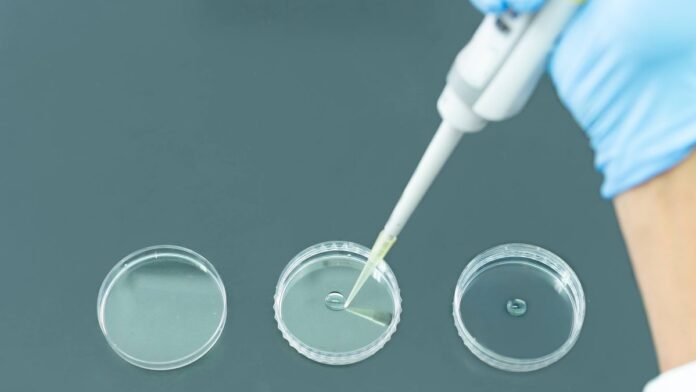

A tragic incident unfolded when a teacher and scientist met her untimely demise due to exposure to a minute droplet of a hazardous chemical. Karen Wetterhahn, a dedicated research chemist at Dartmouth College in the US, was investigating the impacts of heavy metals on living organisms. In the summer of 1996, while handling dimethylmercury, a tiny droplet slipped from her pipette onto her latex glove, unknowingly allowing the compound to breach her skin and enter her bloodstream.
Despite diligently following safety procedures and swiftly changing her gloves, the damage was irreversible. Months later, Karen began displaying alarming symptoms like balance issues, speech difficulties, and vision problems, leading to her hospitalization in January. Medical examinations unveiled that Karen’s mercury levels were a shocking 4000 times above the safe limit, indicating severe poisoning.
Dimethylmercury, a highly toxic substance, swiftly infiltrates clothing layers and skin within seconds, as highlighted by Dr. Ben Miles. The compound’s insidious effects were demonstrated as Karen’s health rapidly deteriorated despite medical interventions to eliminate the mercury from her system. Tragically, after ten months of battling the consequences of the exposure, Karen fell into a coma, eventually succumbing to the poisoning.
This unfortunate incident left a profound impact on the scientific community, prompting the establishment of an award in Karen’s memory by the National Institute of Environmental Health Sciences. Consequently, enhanced safety protocols were introduced in laboratories handling dimethylmercury, acknowledging its ability to permeate materials like latex, PVC, and neoprene almost instantly, as revealed in a 1998 report.