
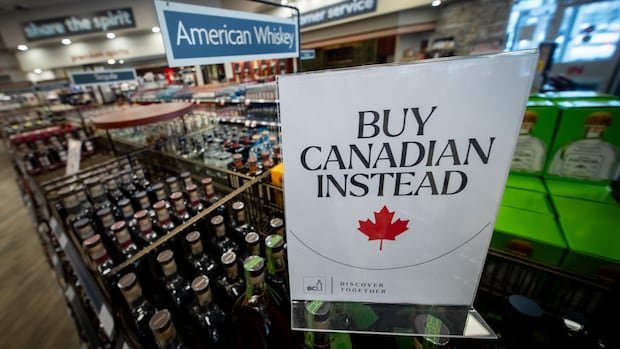

In the aftermath of a failed trade deal with the U.S., the presence of American alcohol in Canada remains mostly unchanged despite ongoing trade tensions. While there have been claims of a ban on American alcohol in Canada, the situation is more nuanced, according to Robert Huish, a Dalhousie University professor specializing in sanctions and tariffs.
The distribution of American alcohol varies significantly across the provinces, with Alberta offering full access to American alcohol while Ontario’s major retailer, LCBO, has chosen not to stock American alcohol, unlike most other regions. The decision by provinces to limit the availability of American alcohol is seen as a strategic move rather than a formal embargo or boycott.
The dynamics of American alcohol availability in Canada have sparked reactions at various levels, including a 50% retaliatory levy imposed by Saskatchewan and public resistance in Ontario to selling off warehoused American alcohol for charity. Despite some provinces resuming sales of American alcohol, consumer interest remains subdued, with a growing preference for local alternatives attributed to dissatisfaction with U.S. trade policies.
In British Columbia, private liquor stores and establishments can access warehoused American alcohol through the provincial Liquor Distribution Branch. Alberta recently lifted its ban on American alcohol imports, aligning with its private liquor retailing system managed by the Alberta Gaming, Liquor & Cannabis (AGLC). Meanwhile, Saskatchewan briefly halted U.S. alcohol purchases before resuming imports and implementing a retaliatory levy.
Manitoba experienced fluctuations in American alcohol availability, with the product being pulled off shelves and later reintroduced, only to be removed again following the breakdown of the U.S. trade deal. Ontario maintained a strict boycott on American alcohol, refusing to sell off warehoused stock or donate proceeds to charity, contrasting with other provinces that embraced these actions.
Quebec suspended American alcohol imports but resumed sales of selected products at risk of spoilage. New Brunswick and Nova Scotia similarly suspended American alcohol purchases before gradually reintroducing them to the market. Other provinces like Prince Edward Island and Newfoundland and Labrador also witnessed shifts in American alcohol availability over the past year.
In conclusion, the availability of American alcohol in Canada reflects a complex interplay of trade policies, public sentiments, and provincial decisions, underscoring a broader trend towards supporting local alternatives amid ongoing trade disputes.