
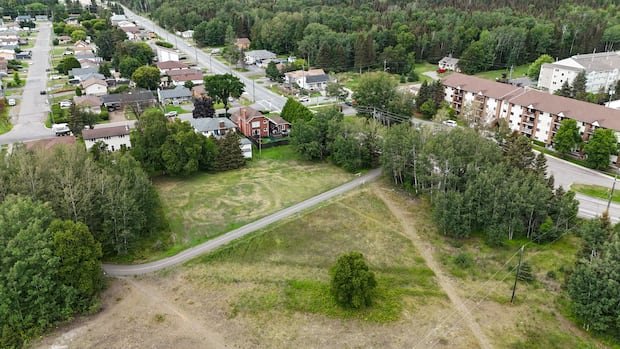

Lori Santink expressed her disappointment but lack of surprise following the city council’s approval to rezone two vacant properties for new housing developments in Thunder Bay, Ontario. Santink resides near 791 Arundel St., one of the three properties sold by the city to Terralux General Contractors and Development Limited earlier this year. Thunder Bay is facing a shortage of around 1,000 housing units to meet the current demand.
Pending necessary approvals, the city could witness the construction of over 900 new units, including 360 units in two apartment buildings at 791 Arundel St., 150 units in one apartment building at 144 Fanshaw St., and 400 units in two apartment buildings at 300 Tokio St. While the proposals for Arundel and Fanshaw streets required rezoning, which was endorsed by the city council, the Tokio Street property already had appropriate zoning.
Santink criticized the Arundel Street proposal, stating that it conflicts with the city’s Net-Zero Strategy and Climate Adaptation Strategy. She highlighted concerns such as the loss of green space, aging sewer infrastructure, increased traffic without adequate access to public transportation during winter, and risks to local species like the yellow-banded bumblebee, Canadian warbler, and grey fox.
The public engagement against the developments has been significant, with Santink’s grassroots group TBay Greenspace Preservation amassing over 2,600 signatures in a petition and organizing a rally at city hall attended by more than 100 people. However, due to Bill 60 (Fighting Delays, Building Faster Act, 2025), residents can no longer appeal municipal council decisions through the Ontario Land Tribunal.
Devon McCloskey, Thunder Bay’s manager of planning services, mentioned that the city is awaiting applications from the developer for site plan control and building permits before construction commences. The projects have undergone preliminary studies focusing on traffic, transportation infrastructure, and environmental considerations, with extensive public consultation.
Coun. Andrew Foulds, representing the Current River ward where 791 Arundel St. is situated, opposed the property’s rezoning but acknowledged the unprecedented level of public engagement. Leia Minaker, an associate professor at the University of Waterloo, emphasized the challenges of achieving consensus in housing developments amid differing opinions and concerns such as traffic, parking, and neighborhood changes.
In conclusion, the developments in Thunder Bay raise complex issues of urban growth, public engagement, and environmental impact. The ongoing debate underscores the need for transparent communication and inclusive decision-making processes to address the varying concerns of stakeholders.