
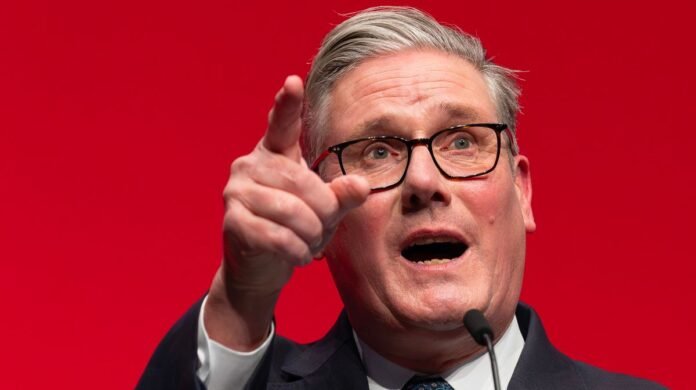

Labour’s situation is still challenging, but the party has ceased exacerbating it. Despite the upcoming difficulties, including the taxing Budget by Chancellor Rachel Reeves on November 26, Keir Starmer finishes the Labour conference in Liverpool in a slightly improved position.
Part of the credit for this goes to Nigel Farage and Andy Burnham. Farage’s racist deportation threats and baseless accusations about migrants consuming wild birds strengthened Starmer’s resolve, providing him with moral clarity. Additionally, Burnham’s actions, although momentarily divisive, managed to unite frustrated Cabinet Ministers, MPs, and factions behind the Prime Minister.
Starmer delivered a powerful keynote speech that resonated with the audience, showcasing his inclusive patriotism in contrast to Farage’s toxic rhetoric. The clash between their ideologies symbolizes civilization versus barbarism.
While Starmer’s speech was well-received, actions speak louder than words, as demonstrated by the need for concrete measures to tackle issues like child poverty, such as eliminating the two-child cap enforced by the Tories.
The Prime Minister received a significant endorsement from Margaret Aspinall, a prominent campaigner, during the conference. Aspinall’s praise for Starmer’s advocacy for ordinary people added to his credibility and was highly valued.
Looking ahead, Labour faces the challenge of narrowing the poll gap and surpassing Farage’s Reform party. The political landscape remains unpredictable, with an election potentially scheduled as late as August 15, 2029. Despite the uncertainties, Starmer’s newfound determination could propel him and Labour back into contention.
Kevin Maguire, Associate Editor of the Mirror and a respected political columnist, provided insights on the conference and its implications for Labour’s future.