
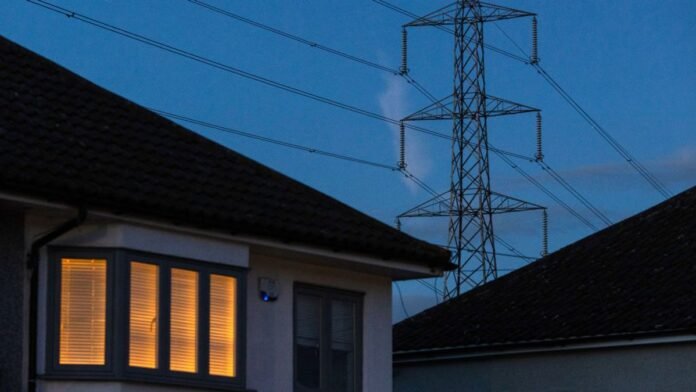

Industry regulators faced backlash following the approval of a £28 billion agreement for energy corporations, resulting in an approximate £110 annual increase in consumer bills.
Ofgem, the regulatory body, has sanctioned these companies to enhance and modernize their electricity and gas networks over the upcoming five years.
These companies are authorized to recover the investment from customers, with an initial £40 price hike in bills starting next April, escalating to £108 per year by 2031. Nonetheless, this amount does not consider the anticipated savings from such substantial investments. Ofgem estimates that, factoring in these savings, the anticipated increase in 2031 will be closer to £30 per customer.
This deal surpasses Ofgem’s initial proposal earlier this year by £4 billion following industry advocacy. Ofgem asserted that this investment would diminish the UK’s dependence on imported energy and eventually lead to cost savings for households.
Citizens Advice criticized the recent agreement, citing that network companies have amassed £4 billion in excess profits over the past four years. Gillian Cooper, the organization’s energy director, warned of an approximate £40 surge in energy bills starting from April 2026, with further increments anticipated in the future.
Simon Francis, the coordinator of the End Fuel Poverty Coalition, cautioned that Ofgem is potentially granting excessive leeway to network and transmission companies. He emphasized the need for thorough scrutiny and consumer protection, stressing that these companies have already reaped substantial profits during the energy crisis, benefiting offshore investors and speculative funds.
Greenpeace UK’s senior climate advisor, Charlie Kronick, emphasized the strain that energy costs place on households and businesses. Kronick advocated for a transition to a cleaner energy system that ultimately reduces prices, urging government intervention to ensure energy affordability.
Dale Vince, founder of Ecotricity, argued that detaching wholesale gas prices from electricity rates is vital in lowering energy bills. Vince criticized Ofgem’s belief that increased renewable energy integration, facilitated by the bill hikes, would lead to reduced costs. He highlighted the disparity in profits, lack of network investments, and the illogical pricing strategies within the energy sector.
Andy Prendergast, national secretary of the GMB union, welcomed the overdue investment in gas and electricity infrastructure, emphasizing the importance of advancing towards energy self-sufficiency and applauding the government’s decisive stance.
The accelerated investment primarily targets companies that own power infrastructure such as lines, cables, and gas conduits, rather than energy providers. Of the total sum, nearly £18 billion will be allocated to gas transmission and distribution networks, with an additional £10.3 billion designated for enhancing the UK’s high-voltage electricity system.
Households should anticipate a £108 increase in network charges by 2031, constituting around one-fifth of the average annual energy expenses, to accommodate the augmented investments—an upsurge from the previously estimated £104 rise outlined in the preliminary verdict in July.
Jonathan Brearley, Ofgem’s chief executive, highlighted that this investment aims to support the shift to alternative energy sources and foster industrial growth to shield against fluctuating gas prices.
A government representative stressed the imperative nature of upgrading the country’s energy infrastructure, which has suffered from years of neglect, to ensure energy security.
Dhara Vyas, CEO of Energy UK, emphasized the significance of expanding energy transport infrastructure to safeguard reliability and meet future energy demands. Vyas underscored the necessity of modernizing the electricity grid to accommodate escalating energy requirements efficiently.
Since the beginning of the year, Ofgem has scrutinized energy companies’ proposals and slashed over £4.5 billion from the initial £33 billion plans. However, under pressure from network firms, Ofgem increased the approved amount in July to address additional electricity transmission needs and infrastructure concerns.
Ofgem highlighted that the investment will facilitate 80 new power projects, including enhancing the grid’s capacity through new technologies and infrastructure to manage the influx of electricity from renewable sources.
Scottish and Southern Electricity Networks, a subsidiary of SSE, affirmed that the investment will diminish reliance on imported energy, alleviate grid congestion, enhance energy security, and bolster economic growth across the UK.
National Grid, responsible for a significant portion of Britain’s electricity grid, commended Ofgem’s acknowledgment of the substantial investment required in the