
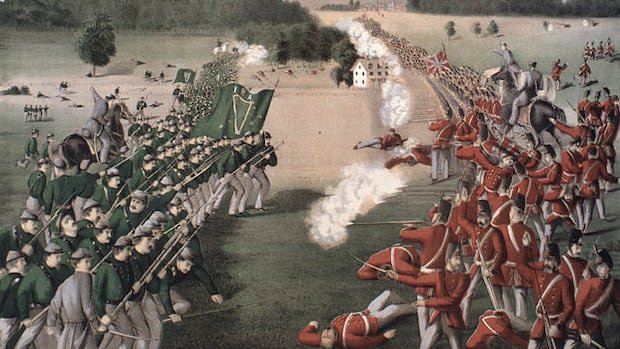

A relatively unknown clash occurred on Canadian land a year before Confederation, resonating mainly in Fort Erie, Ont. The 1866 Battle of Ridgeway, also known as Limestone Ridge, holds historical significance as the first battle fought by Canadian troops under Canadian leadership. This event inspired Decoration Day, a predecessor to Remembrance Day, observed in some regions annually.
Despite its historical importance, the nine soldiers who perished in the battle are not commemorated in the Books of Remembrance on Parliament Hill. A new petition presented in the House of Commons aims to honor these fallen soldiers, along with others who lost their lives following the battle.
Conservative MP Fred Davies, representing the Niagara South riding encompassing Fort Erie, advocates for national recognition of the battle site. The battle, although not a clear Canadian victory, saw inexperienced volunteers confronting Fenian raiders, many of whom were veterans of the American Civil War.
Historian Peter Vronsky, author of “Ridgeway: The American Fenian Invasion and the 1866 Battle that Made Canada,” praised the swift mobilization of Canadian forces but highlighted their lack of preparation for modern warfare. The Canadians engaged the invaders but eventually retreated after a chaotic exchange of fire and a Fenian bayonet charge.
Despite the tactical defeat, the Battle of Ridgeway played a crucial role in thwarting the Fenian incursion. The sacrifice of the fallen soldiers remains significant, prompting calls for their official recognition in the national remembrance books.
A memorial erected in 2016 commemorates the nine fallen soldiers, yet efforts to include their names in the Books of Remembrance have been unsuccessful. Advocates stress the importance of acknowledging these individuals’ contributions to shaping Canada’s history and unifying the nation.
Although predating the official formation of Canada, the Battle of Ridgeway holds a place in the country’s remembrance tradition. The battle’s impact on Confederation and the formation of modern armed forces is recognized by historians and local leaders, underlining its enduring significance in Canadian history.