
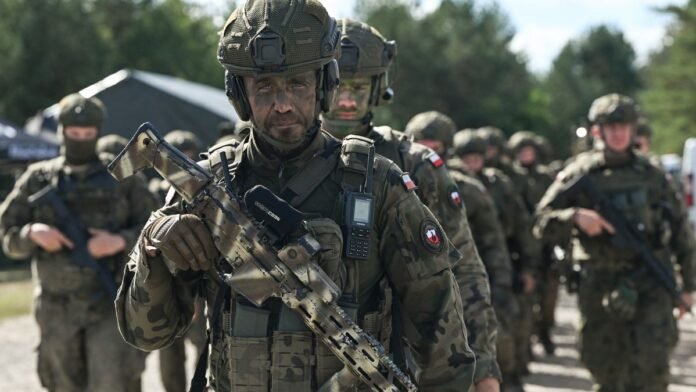

NATO is facing its highest level of threat in over 75 years due to ongoing Russian aggression, experts warn. Following months of aggressive actions by Vladimir Putin, including airspace violations in several allied countries, Western leaders have issued strong warnings to the Kremlin. NATO Chief Mark Rutte stated that while there was no immediate need to shoot down Russian planes, the alliance is prepared to take necessary action if the situation escalates. The UK Foreign Secretary and Donald Trump have also voiced readiness to confront Russian aggression.
Experts believe NATO is on the brink of a major conflict with Russia, with concerns that Putin’s actions may lead to a dangerous escalation. There are calls for a more decisive response to Russian provocations, with suggestions that NATO should have taken a tougher stance earlier. The alliance’s decision-making process involves thorough analysis of intelligence and consultation among member states before considering military action. Various options are being considered, ranging from troop deployments to invoking Article 5 for collective defense.
NATO’s approach focuses on incremental escalation to deter further aggression while demonstrating resolve. Adjustments to rules of engagement may be made based on evolving circumstances, potentially shifting from defensive to active deterrence. The highest level of escalation involves invoking Article 5, signaling a joint combat operation among member states. However, the pathway to escalation is not always linear, and not all steps need to be taken to trigger Article 5.