
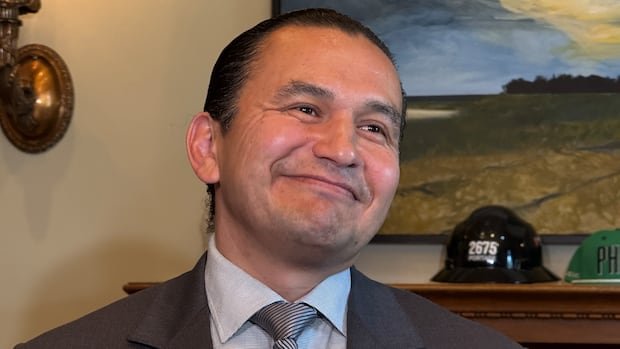

Manitoba’s premier has indicated a reluctant willingness to consider reintroducing American spirits as part of a potential trade agreement, with a caveat – advising against purchasing them. Negotiations between Canadian and U.S. officials are in progress to prevent new U.S. tariffs on approximately $30 billion worth of Canadian goods. During discussions on the proposed deal with his cabinet and premiers, Prime Minister Mark Carney sought the return of American alcohol to store shelves, which Manitoba has not yet agreed to.
If American products are restored to Liquor Marts as part of the trade deal, Premier Kinew emphasized that Canadians have the option to opt for Canadian alternatives instead. “Don’t buy it. Let it sit on the shelf … and buy the Canadian stuff instead,” Kinew conveyed during a press conference on Thursday, denouncing President Trump’s trade tactics and treatment of Canada.
Back in 2025, the province initially removed millions of dollars’ worth of U.S.-made alcohol in retaliation for Trump’s imposition of tariffs on Canadian goods that were not compliant with the Canada-U.S.-Mexico trade agreement. Manitoba residents queued up to purchase American liquor for a limited period in December, following the reintegration of some stock before Christmas, with $2.6 million in proceeds donated to holiday charities.
Even with the availability of U.S. alcohol, Manitobans displayed a preference for local options, leading to a nearly $21 million increase in sales at Liquor Marts, as reported by the province in June. While other Prairie provinces swiftly reintroduced U.S. alcohol, Alberta and Saskatchewan respectively revoked their bans after a short period, emphasizing a commitment to fair trade.
In the context of procurement policies, Carney urged the premiers to not exclude the U.S., to which Kinew highlighted Manitoba’s inclination towards Canadian or non-American sources, resulting in a substantial decrease in spending on American firms. The Opposition leader criticized Kinew for allegedly not fully supporting local businesses, pointing to a $36 million contract with American-based Aramark food services.
Kinew highlighted the importance of supporting workers like those at the Gerdau steel mill in Selkirk, Manitoba, for the trade terms to be acceptable. He expressed skepticism towards the durability of any deal with Trump, asserting Manitoba’s prerogative to remove U.S. alcohol from shelves again if necessary.
In a separate development, a California winemaker and Winnipeg native criticized Kinew’s stance on U.S. alcohol, stressing that not all American alcohol producers pose a problem. The winemaker noted the negative impact of the trade war on his business, leading to operational challenges and decreased exports.
Feedback from Manitobans on the potential return of American liquor varied, with some expressing support for buying local products and skepticism towards American goods. The sentiments reflect a growing trend of favoring domestic options and the potential implications of trade dynamics on both sides of the border.