
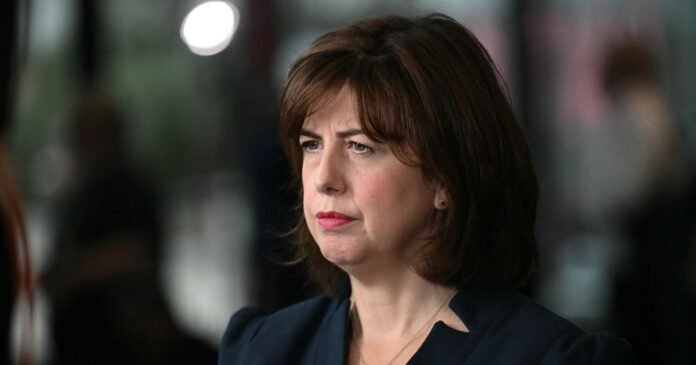

Labour deputy leadership contender Lucy Powell is urging the Government to eliminate the two-child limit, emphasizing the need for a clearer stance in the upcoming child poverty strategy. Pressure has been mounting on Keir Starmer to abolish the Conservative policy, which has been criticized for pushing families into financial difficulties.
Powell, the Member of Parliament for Manchester Central, highlighted Labour’s perceived missteps on issues like winter fuel and disability benefit reductions, suggesting that these have alienated ordinary citizens. Despite being removed by Starmer in a recent reshuffle, Powell is in a competitive race against Education Secretary Bridget Phillipson for the deputy leadership position.
Phillipson, involved in formulating the child poverty strategy, is expected to face significant internal and external pressure regarding the two-child limit, affecting benefits like Child Tax Credit and Universal Credit for third and subsequent children.
In an interview with the BBC’s Political Thinking podcast, Powell stressed the importance of addressing child poverty, citing the removal of the two-child benefit cap as a crucial policy measure. She emphasized the need for a well-defined approach to achieve this objective.
Reflecting on the government’s accomplishments in its first year, Powell expressed concerns that Labour’s core values and commitment to the public have been overshadowed by past errors. She emphasized the necessity for Labour to present a coherent economic vision that resonates with progressive voters, uniting them under a shared goal.
Powell indicated her reluctance to rejoin the Cabinet, preferring to serve as a bridge between the party’s diverse factions and the leadership. She hinted that her candid stance on issues such as benefit cuts may have contributed to her dismissal.
As the deputy leadership race intensifies, Powell and Phillipson are mobilizing support from party members and key stakeholders. While Phillipson has secured endorsements from trade unions and constituency parties, Powell appears to have an edge among party members, as indicated by recent polls.
Launching her campaign in Sunderland, Phillipson called for party unity, promising transformative change and a renewed focus on defeating the Reform party. She underscored the importance of providing hope to families nationwide and empowering young people with greater opportunities for growth and prosperity.