
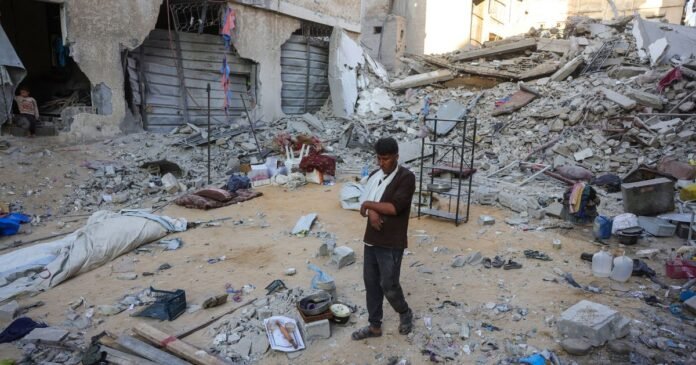

Israel’s military has reinstated the Gaza ceasefire following intense overnight airstrikes that claimed the lives of 104 Palestinians, with almost half of them being children.
The surge in violence, which resulted in the deaths of 46 children, was triggered by militants attacking Israeli troops and killing a soldier who held US citizenship.
The breach of the October 10 ceasefire marked a significant setback to the peace efforts in the region, disrupting the relative calm that had prevailed in Gaza.
Israeli Prime Minister Benjamin Netanyahu authorized the airstrikes, citing Hamas for violating the ceasefire by releasing partial remains of a previously held hostage.
The situation escalated further when an Israeli soldier was shot and killed during an exchange of gunfire in Rafah, the southernmost city in Gaza.
The latest events have raised concerns about the fragility of the ceasefire in Gaza, as more than 100 Palestinians lost their lives in response to the killing of an Israeli soldier within the territory.
Hamas, the militant group involved, has faced criticism for its actions, including the release of hostages and the alleged involvement in provocative incidents, such as the shooting that led to the recent escalation.
Despite attempts to strain relations between Israel and the US, Hamas’s tactics seem to have backfired as President Trump expressed support for Israel’s actions in response to the attacks.
Netanyahu’s decisive actions have reinforced his control over the peace process in Gaza, allowing him to wield significant power in determining the course of future events in the region.
The ongoing cycle of violence raises questions about the sustainability of the ceasefire and the potential for further escalations between the conflicting parties.
As the situation unfolds, the international community, particularly the US, faces the challenge of defining and responding to what constitutes a proportionate reaction to the conflict in Gaza.