
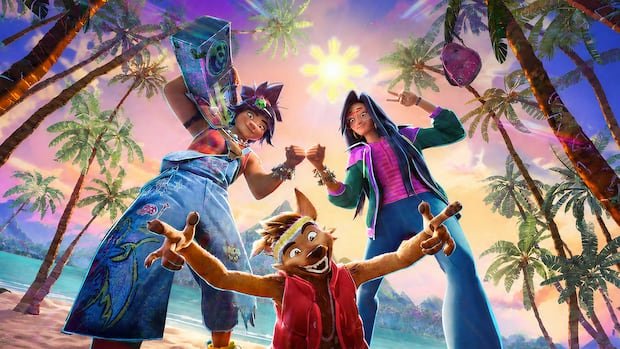

Filipino Canadian Tricia Serdon, residing in Toronto, has longed for a princess in Disney movies who resembled her background without success. However, her quest was fulfilled by the release of Forgotten Island, a groundbreaking film by Dreamworks Animation on Sept. 25. Serdon, a marketing co-ordinator, sees the movie as a heartfelt tribute to Filipinos.
The narrative of Forgotten Island revolves around childhood friends Jo and Raissa, whose lives diverge when Raissa moves to the U.S. for college while Jo remains in the Philippines. Their emotional journey leads them to Nakali, a mystical realm inhabited by supernatural beings inspired by Filipino folklore, with “Nakali” derived from the Tagalog word for “forgotten.”
Although rooted in ancient tales, Nakali serves as a reimagined space that introduces viewers to mythical creatures like the manananggal and the kapre. For Serdon, who grew up hearing stories about these creatures in the Philippines, witnessing their portrayal on the big screen was not only thrilling but also deeply personal, resonating with her cultural heritage.
Directed by Januel Mercado and Joel Crawford, the film aims to showcase Filipino culture through a rich tapestry of lesser-known mythology. The inclusion of creatures like the weredog serves as a metaphor for the characters’ emotional struggles, reflecting themes of adolescence and identity.
Beyond the fantastical elements, Forgotten Island captures the essence of Filipino family life, portraying scenes of familial gatherings, karaoke sessions, and playful banter among relatives. This depiction resonates with many viewers, offering a refreshing portrayal of Filipino culture that highlights humor, music, and food rather than focusing solely on hardship.
The commitment to representation in the film extends to the voice cast, with prominent Filipino talents lending their voices to the characters. The filmmakers hope that Forgotten Island will inspire audiences to explore more Filipino stories and encourage Filipino creators to share their narratives with the world.
Reflecting on her own childhood experiences, Serdon envisions a future where young Filipinos can readily find characters from their culture to identify with, signaling a shift towards greater inclusivity and representation in storytelling. The impact of Forgotten Island lies not just in reflecting the Filipino audience but also in paving the way for more diverse and authentic narratives to be shared.