
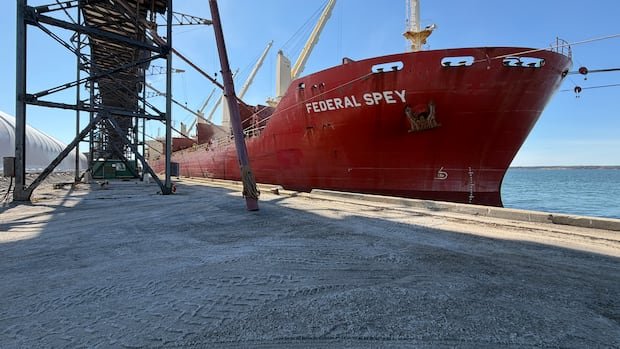

A vessel is scheduled to depart from the Port of Churchill this week carrying the town’s first grain shipment in more than five years. Loaded with approximately 30,000 metric tons of Canadian wheat, the ship will head to Europe, marking a significant achievement according to government officials.
During a ceremony at the port on Monday, Northern Affairs Minister and Member of Parliament for Churchill-Keewatinook Aski, Rebecca Chartrand, highlighted the symbolic return of Churchill as a crucial northern link connecting the Prairies, the Arctic, and the global market. The halt in shipments from Churchill, Canada’s sole railway-accessible deep-water arctic port, began with the onset of the COVID-19 pandemic, with the last grain shipment departing in 2020.
Arctic Gateway Group, the owner of the port and Hudson Bay Railway, announced in July its plans to resume grain shipments this summer. Recent developments at the port suggest a potential extension of its four-month shipping season as feasibility studies indicate the possibility of year-round shipping without relying heavily on expensive icebreakers due to melting sea ice.
Investments in the port are seen as a strategic move to expand Canada’s market reach amidst shifting global trade dynamics and evolving relations with the U.S. Chartrand emphasized the importance of strengthening domestic infrastructure and diversifying trade to reduce reliance on any single market.
Arctic Gateway, a collaboration of northern communities and First Nations, anticipates the most diverse shipping season in the port’s history. In addition to the wheat shipment, the port will handle zinc concentrate, its first-ever potash shipment, and a resupply vessel bound for Nunavut this week. CEO Chris Avery highlighted the neglected state of the port under previous ownership and commended the decision to take control as a proactive move.
The ongoing grain shipment to Antwerp, Belgium, is part of a partnership with AGT Foods, with three shipments scheduled from the port this season. Local residents like Katie deMeulles express concerns about the impact of increased port activity on wildlife, but acknowledge the reassurance of Indigenous ownership by Arctic Gateway in safeguarding the environment.
Looking ahead, Churchill residents and stakeholders are cautiously optimistic about the port’s revival, balancing economic opportunities with environmental considerations for the benefit of the community and the country at large.