
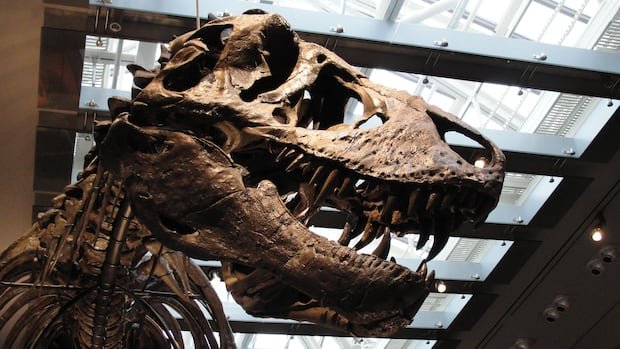

Scientists have debated the warm-bloodedness of dinosaurs for a long time. Recently, researchers claim to have measured the temperature of two T. rexes using a chemical method.
Aradhna Tripati, a professor and geochemist at the University of California, Los Angeles, explained the challenges they faced in conducting the research without physically measuring the dinosaurs’ temperatures. The study, published in the journal Science Advances, utilized a chemistry-based technique that examines bioapatite in hard tissues like tooth enamel and eggshells. This mineral contains carbon atoms that bond with oxygen, and specific isotopes indicate temperature variations.
Comparing isotope clumping in living animals with different body temperatures enabled scientists to estimate the body temperature of extinct creatures, including dinosaurs. Previous studies by UCLA scientists a decade ago suggested that titanosaurs and oviraptors were warm-blooded.
Analyzing teeth from a T. rex named Thomas involved shaving enamel samples to determine its body temperature ranging between 33.8 C and 38.8 C, akin to large mammals and flightless birds. The findings indicate that a warm-blooded T. rex would have had greater adaptability and could have inhabited diverse regions, including colder environments like the Arctic.
Experts, like paleontologist Anthony Fiorillo, find this study compelling, shedding light on how dinosaurs like the T. rex may have coped with varying climates. The research also prompts discussion on the metabolic processes of dinosaurs compared to modern warm-blooded animals. Further studies are needed to fully comprehend the implications of these findings on dinosaur behavior and evolution.