
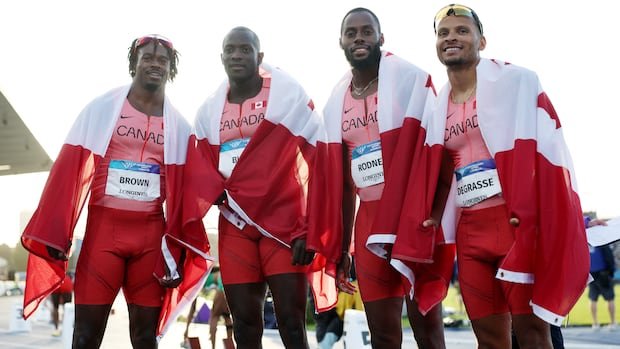

Canada’s 4×100-metre relay teams at the Commonwealth Games faced differing levels of expectation based on their seed times. The women’s team, ranked second behind Jamaica, secured a silver medal in the final race, which was seen as a success despite not overtaking the Jamaican favorites. On the other hand, the men’s team, holding the fastest seed time, also won silver, which carried a sense of triumph given their pre-race status as favorites.
The men’s team initially faced disqualification due to a lane violation by the leadoff runner, Aaron Brown. However, a review of additional footage proved Brown had stayed in his lane, leading to the reinstatement of Canada’s silver medal position. This turn of events highlighted the fine margins in relay racing and the importance of video evidence in determining outcomes.
Looking ahead, questions arise about the future of Canada’s 4×100-metre teams, particularly in integrating younger talent and maintaining competitive performance. The emergence of breakout stars like Lachlan Kennedy from Australia underscores the potential for new talent to impact the relay scene. As Canada’s experienced runners age, the need for fresh talent and speed becomes crucial for sustained success.
While uncertainties persist about the team’s future, the men’s relay squad faces challenges in maintaining peak performance levels as they approach an average age of 34.2. In contrast, the women’s team benefits from flexibility in lineup changes and the ability to experiment without the pressure of consistent podium finishes. Balancing continuity with new talent infusion will be key for Canada to remain competitive on the global relay stage.