
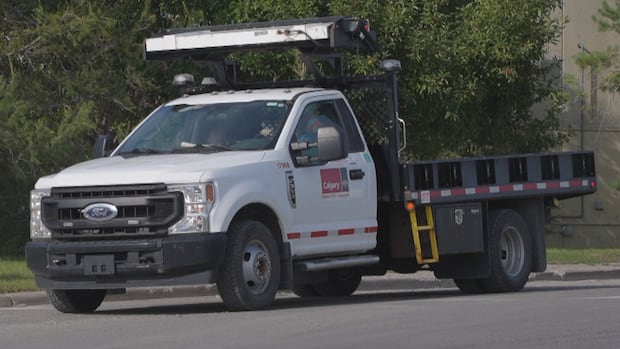

In the past, drivers of City of Calgary vehicles were responsible for their own fines, but this policy shifted three years ago, resulting in taxpayers footing the bill for more than $120,000 in fines, as revealed by data acquired by CBC News.
“As of April 2023, the city began covering routine on-duty traffic fines for employees using city vehicles or equipment, following grievance and union arbitration agreements seen in other municipalities throughout Alberta,” stated Christy Schaefer, manager of fleet training and compliance in operational services, in an email to CBC News.
“This policy does not extend to cases of gross negligence, impaired driving, dangerous driving, distracted driving, or offences under the Criminal Code,” Schaefer added.
The city’s updated policy was designed to be in line with practices adopted by other municipalities, particularly Edmonton, as a result of a union arbitration ruling involving the City of Edmonton.
CBC News reached out to various other jurisdictions in Alberta regarding their traffic fine policies. The City of Red Deer absorbs fines incurred by its staff, while the City of Edmonton covers photo radar fines but not those issued by officers.
Officials from Lethbridge, Medicine Hat, and Airdrie also replied, indicating in separate emails that their employees bear responsibility for fines accrued while operating city vehicles.
The total number of citations issued to City of Calgary vehicles fell to 96 in 2025, down from 189 in 2024. In both years, the majority of violations were related to speeding or running red lights.
Data from the Calgary Police Service indicates that the overall number of tickets issued by officers, through photo radar, or speed-on-green cameras also decreased during this period, dropping from approximately 210,000 to just below 100,000.
The city noted that parking violations occurring in private lots are also covered. “If the infraction involves an independent parking company, the city assumes responsibility for the penalty, but this situation is quite rare, averaging about three to four instances annually.” City vehicles are eligible for free parking in lots and on streets managed by Calgary Parking.
The Importance of Accountability
The share of tickets issued to city vehicles constitutes a minor fraction of the total tickets issued throughout the city.
However, during an interview with CBC News, prior to the confirmation that the city covers these fines, Ward 13 Coun. Dan McLean expressed his discontent with taxpayers bearing the financial burden.
“What is concerning isn’t just that they receive the tickets, but who is responsible for paying them?” McLean remarked. “Taxpayers shouldn’t be responsible for the parking or speeding tickets of others.”
Safety Not Compromised
Schaefer explained that employees operating city vehicles undergo thorough training and qualification before they are allowed to drive for the city, and they are expected to operate these vehicles in a safe, courteous, and professional manner.
“The city has a well-established operator qualification, training, and compliance program,” she noted.
She also highlighted that Calgary possesses the largest fleet in Alberta, with approximately 6,000 vehicles covering over 90 million kilometers annually.
“Considering the scale of fleet operations, the city does not view these figures as indicative of a larger issue and remains dedicated to ensuring safe and responsible vehicle operation,” she said.
Mike Maher, president of the Amalgamated Transit Union Local 583 in Calgary, concurred but suggested it may reflect the pressures of time faced by drivers.
“The schedules for certain routes are exceptionally tight,” he pointed out. “If the schedules were more realistic, I believe that individuals wouldn’t feel as pressured to make all those connections and provide service.”
However, Calgary Transit stated that the traffic tickets given to transit operators are distributed throughout the city and at various times.
“They are not limited to specific routes or peak hours,” the department explained in an email to CBC News.
“Operators are never expected to sacrifice safety to keep to schedules and are required to drive according to road conditions, adhering to defensive driving principles taught through training and daily operations.”
Revenue from traffic fines is divided between the province and local municipalities.