

Parts of British Columbia are experiencing severe drought conditions this summer, leading to government-mandated water restrictions in areas like Bessette Creek to safeguard salmon populations from dangerously low water levels. Temporary protection orders were also implemented for the Salmon River watershed, initially rescinded due to heightened wildfire risks but later reinstated in response to ongoing drought challenges.
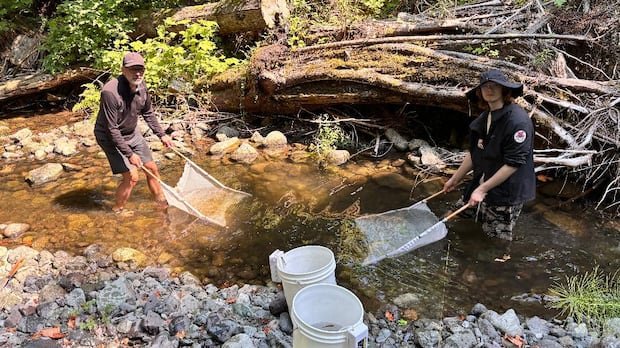
Bob Crandall, treasurer of the Cowichan Lake Salmonid Enhancement Society, highlighted the escalating dryness of the 16 streams linked to Lake Cowichan that the society oversees. To mitigate the impact, the society engages in fry salvage operations, manually relocating fish from drying water bodies to more sustainable environments.
Crandall emphasized the human responsibility to address ecosystem challenges caused by human activities, advocating for proactive interventions. While local communities support these efforts, scientists caution that such actions have limitations and may not be a sustainable long-term solution.
Collaborating with the Ts’uubaa-asatx Nation and volunteers, Crandall coordinates the relocation of various fish species like salmon, trout, and char to areas with better water availability. However, the changing climate presents new obstacles, with streams drying up farther upstream each year, necessitating increased efforts for fish relocation.
The fry salvage process involves utilizing aerators and nets to ensure fish survival during transport, a demanding task exacerbated by hot weather conditions. Despite the challenges, Crandall, who has a lifelong affinity for fish, remains committed to preserving these species in their natural habitats.
The Ts’uubaa-asatx Nation plays a crucial role in the fry salvage initiatives, utilizing drones to identify drying streams and actively participating in fish relocation efforts. The community’s deep connection to salmon underscores the importance of conservation projects and sustainable resource management for future generations.
However, similar rescue initiatives worldwide are facing constraints due to escalating drought and extreme heat events. In France, unprecedented weather patterns have rendered traditional fish relocation methods ineffective, posing significant threats to aquatic ecosystems.
Jean-Pierre Faure of the Fédération de Pêche du Rhône highlighted the detrimental impact of high temperatures on fish health, emphasizing the urgent need for ecosystem restoration and adaptive water management strategies. He stressed that short-term interventions like fish relocation may not be viable in the face of widespread environmental changes and escalating costs.
Faure’s observations underscore the pressing need for a comprehensive approach to address climate-induced challenges in preserving aquatic biodiversity, shifting the focus towards sustainable ecosystem management and proactive conservation measures.