
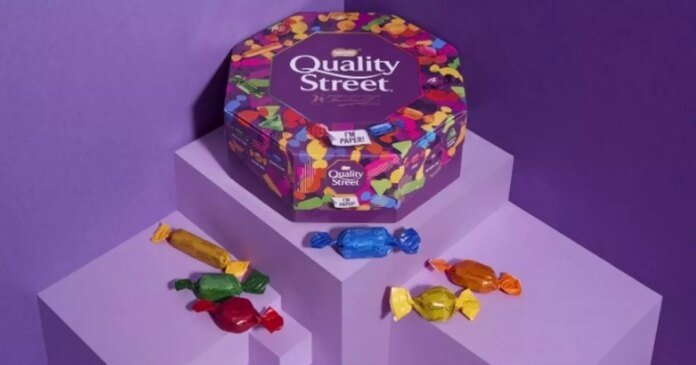

Nestle has announced a significant update to its Quality Street packaging for the second consecutive year. The renowned chocolate manufacturer has revealed that its Quality Street chocolates will once again be presented in paper tubs as part of Nestle’s broader initiative to ensure all packaging is recyclable by 2025.
Last year, Nestle introduced the eco-friendly, eight-sided paper tubs, sparking mixed reactions among consumers. While some shoppers expressed a preference for the traditional tins due to their versatility, others embraced the new paper tub design as a positive step towards sustainability.
Starting this October, customers can purchase the paper Quality Street tubs at selected Tesco stores, alongside the option to still buy the plastic tubs.
A spokesperson from Nestle confirmed the return of paper tubs for Quality Street at selected Tesco stores this Christmas, emphasizing the brand’s commitment to assessing consumer preferences and exploring innovative ways to enhance packaging sustainability.
In the previous year, over 200,000 paper tubs containing approximately 150 tonnes of Quality Street sweets were distributed to specific Tesco outlets. The paper tub maintains a luxurious appearance with gold foil embellishments, features a re-close mechanism, and can be easily recycled after use.
Quality Street transitioned from colorful plastic wrappers to recyclable paper packaging in 2022. Jemma Handley, Senior Brand Manager for Quality Street, expressed pride in the brand’s pioneering effort to introduce paper tubs during the holiday season, ensuring a visually appealing design without compromising on the beloved taste of Quality Street sweets.
Cheryl Allen, Head of Sustainability – Confectionery Europe at Nestle, highlighted the company’s dedication to sustainable packaging solutions, aiming to align with evolving consumer preferences and technological advancements. The trial of paper tubs aims to gather valuable insights for future sustainable packaging strategies, emphasizing Nestle’s ongoing commitment to reducing the use of virgin plastic.