
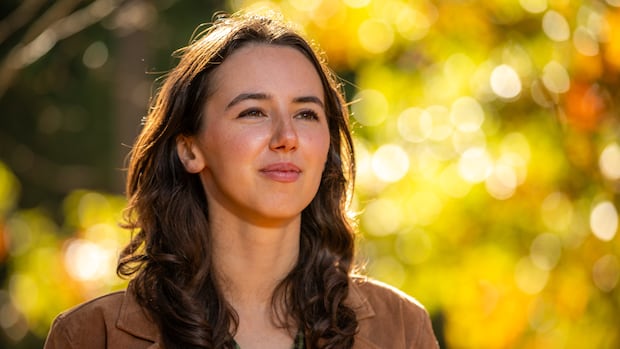

While on a Via Rail train heading to Ottawa alongside her Grade 11 peers, Emily Lowan recalls the profound sorrow she experienced upon learning about U.S. President Donald Trump’s initial election victory.
This moment marked the beginning of her awareness regarding the severity of the climate crisis, according to the 26-year-old leader of the B.C. Green Party.
“I remember feeling as though I had a choice: I could either remain paralyzed by dread and indifference, or I could take action,” she said.
Lowan embarked on a decade-long journey of activism. She spearheaded initiatives to mobilize young voters during the 2017 provincial election, led demonstrations that encouraged the University of Victoria to divest from fossil fuel enterprises, and focused on fossil fuel projects during her tenure at Climate Action Network Canada.
Last year, inspired by the campaign style of New York democratic socialist mayor Zohran Mamdani, Lowan became one of the youngest individuals in Canada to be elected as a political party leader.
Despite not holding a seat in the legislature, where the Greens have two representatives, she has spent a significant portion of the past year traveling across the province to cultivate grassroots support.
This effort rapidly transitioned into her inaugural provincial campaign last month when NDP Leader David Eby announced a snap election, a move that Lowan and several others criticized as politically opportunistic, while Eby argued it was necessitated by potential U.S. tariffs.
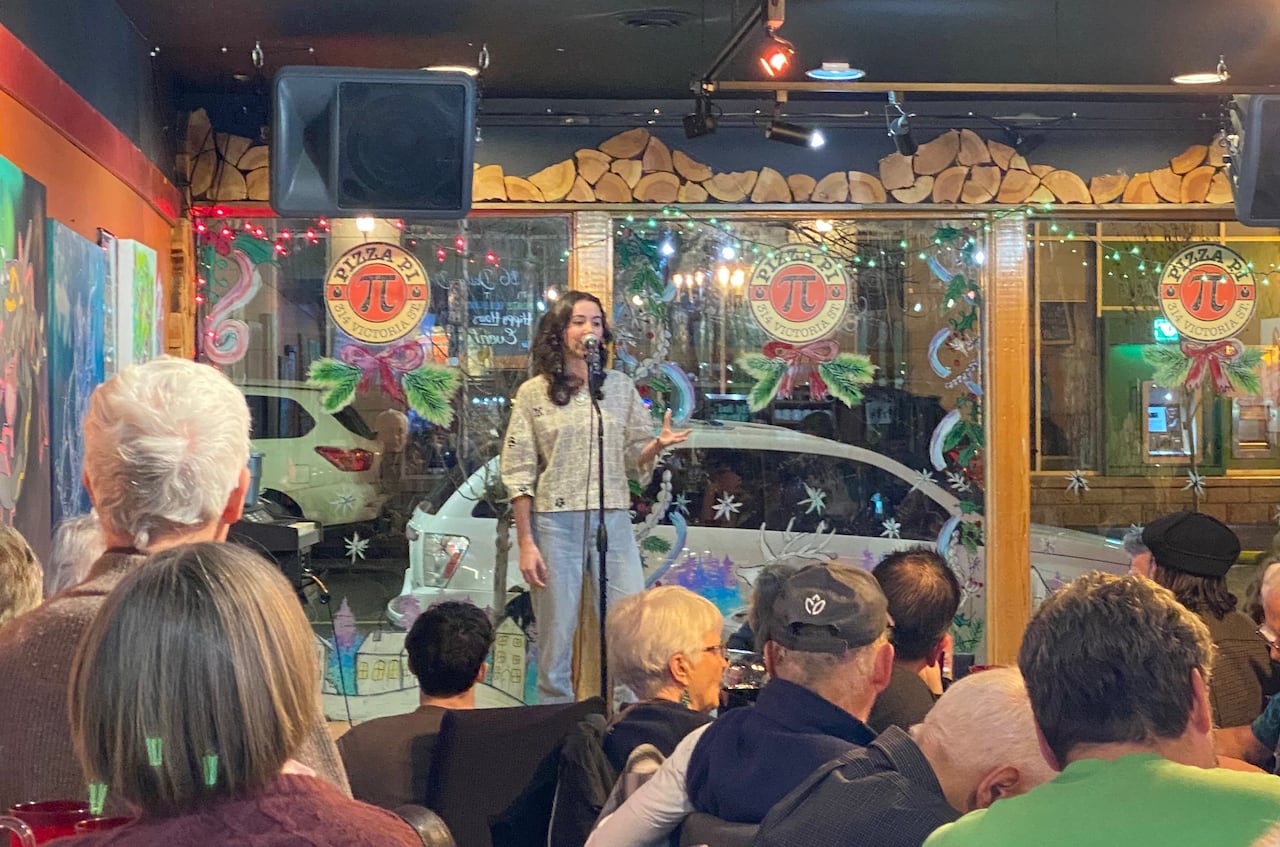
Lowan addresses supporters during an event at Pizza Pi in Kamloops. (Submitted by B.C. Green Party)
Lowan aims to secure a balance of power but first needs to win a seat for herself.
“What I ask of voters is that while I may not be premier immediately, I want the B.C. Greens to maintain a minority government to hold the government accountable,” she explained.
She indicated that the Greens would have “terms and conditions” for any party they collaborate with and did not dismiss the possibility of forming a government in partnership with the B.C. Conservatives.
“Nothing is off the table,” she remarked.
The Greens’ negotiations to revise their partnership with the NDP collapsed earlier this year, as the Greens asserted that too many of the government’s commitments had been delayed or ignored.
According to Lowan, the nine-year NDP government has lost trust among First Nations, neglected climate pledges, and allowed affordability issues to escalate. Although Eby has expressed concerns to progressive voters regarding vote-splitting benefiting the Conservatives, she argues that the NDP merely seeks to evade the accountability that another agreement with the Greens would entail.
“The NDP asserts that there are no funds available, stating we cannot finance child care, housing, or transit improvements that would enhance your life,” she stated.
“However, they haven’t explored the multi-car garages.”
The B.C. Green Party’s agenda includes a pledge to construct 26,000 affordable, non-market homes annually, establish community health centers in every region, and implement a wealth tax on British Columbians with a net worth exceeding $50 million. Lowan claims that this initiative could generate $22.2 billion in its first year, followed by a smaller annual tax on the wealthiest one percent of residents.
Andrew Weaver, the former leader of the B.C. Greens and current candidate for CentreBC in Oak Bay-Gordon Head, describes Lowan as “incredibly bright” and talented since her time as a student activist.
Nonetheless, he criticizes her current platform, which he believes will be “nearly impossible to implement,” as well as her choice to run for office for the first time as leader.
“I think the party made a significant error, and someone should have taken the lead from one of the two existing MLAs,” he stated.
“Emily has yet to prove that she can be elected.”
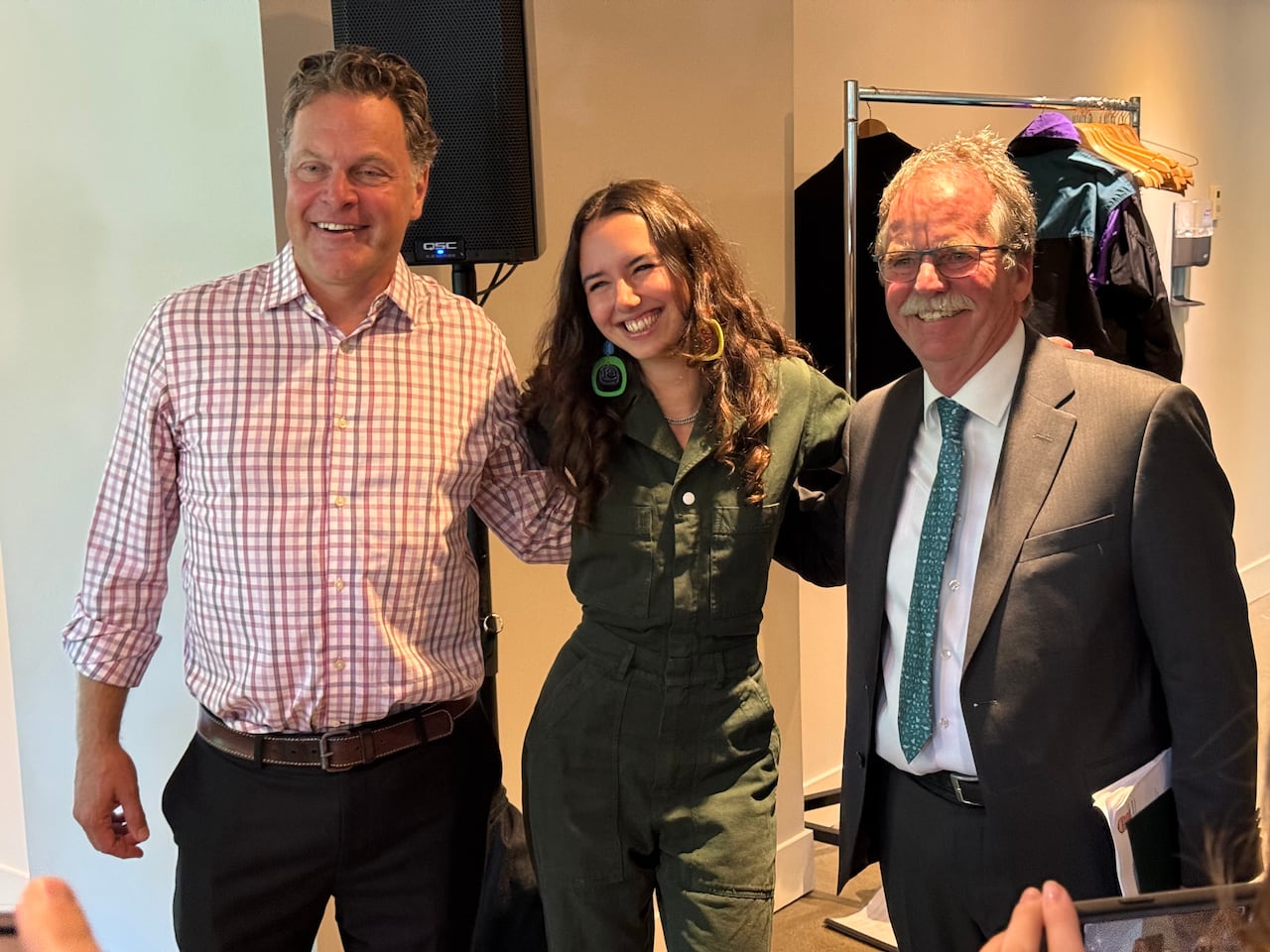
Lowan is pictured with party MLAs Jeremy Valeriote and Rob Botterell in Victoria on Sept. 24, 2025. (Justin McElroy/CBC)
Sonia Furstenau, Lowan’s predecessor as Green leader, asserts that the party’s capacity to present 73 candidates for a snap election reflects Lowan’s leadership.
“She has shown that she is knowledgeable and possesses clear values and principles,” Furstenau remarked.
“She represents many individuals who have felt overlooked in politics for a long time: not just youth, but working individuals as well.”
Recently, Lowan has dedicated much of her time to canvassing neighborhoods in the Saanich Peninsula and Gulf Islands, where she aims to secure a seat in the legislature that was previously held by former Green MLA Rob Botterell.
Some of the stories she encounters from residents and their families regarding affordability challenges resonate with her own experiences as a child of a single mother who worked hard to secure co-op housing for their family.
Having grown up on southern Vancouver Island, Lowan describes herself as “always enthusiastic,” engaging in tap dance and musical theatre. In her free time away from the campaign, she enjoys putting on a wetsuit and snorkeling at beaches along the Saanich Inlet.
This election cycle will see the B.C. Greens engaging more directly with the NDP for progressive voters, according to Sanjay Jeram, a political science instructor at Simon Fraser University.
However, even following Pete Fry’s election as Vancouver’s inaugural Green mayor, Jeram does not anticipate the Greens winning more than one to three seats.
“They’ve maximized their potential,” he stated.
“I genuinely believe this is largely influenced by external factors and the current political landscape.”
Lowan asserts that she has witnessed the influence of a few Green MLAs holding the balance of power and is eager to demonstrate the capabilities of her team.
“I hope that British Columbians will vote for the change they truly wish to see in this province, for accountability, and for a better future,” she concluded.