
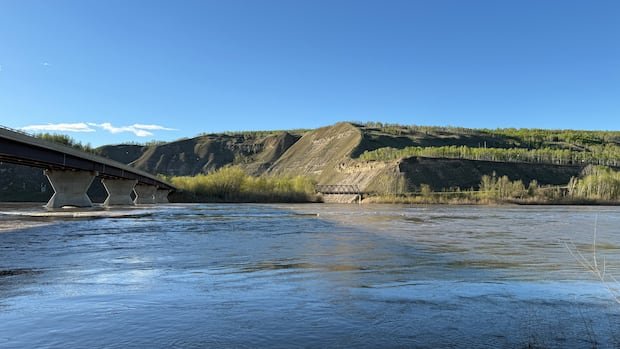

Leaders in northeastern British Columbia are advocating for the establishment of a new fund to compensate local communities in the event that the province proceeds with constructing a fourth hydroelectric dam on the Peace River. During a recent public briefing by B.C. Hydro to the Peace River Regional District, the proposed Site E dam, situated near the Alberta border north of Dawson Creek, was discussed.
Brad Sperling, the board chair, emphasized that the dam would have significant implications for the B.C. river system, potentially displacing more residents, farmlands, public parks, bridges, and impacting local water sources. Sperling expressed concerns about the transformation of the Peace River into a series of reservoirs if the project goes forward.
B.C. Hydro argues that there is a pressing need for additional reliable power sources to meet the anticipated 50% surge in power demand by 2050, primarily driven by industrial expansion. However, Sperling highlighted the enduring consequences of past energy developments in the region, including the existing dams on the Peace River and the ongoing construction of large wind farms.
He proposed a compensation model akin to the Columbia Basin Trust, established in 1995 to support communities affected by dams on the Columbia River, which now boasts assets exceeding $1.2 billion. Sperling emphasized the necessity for the northeast region to receive fair economic benefits from the power generation activities in the area.
The current regulatory framework, under the Clean Energy Act, prohibits the construction of Site E and another proposed hydro project on the Homathko River. Nevertheless, B.C. Hydro anticipates legislative adjustments to allow for geotechnical and environmental studies at these sites. Julia Balabanowicz, B.C. Hydro’s government relations director, emphasized the need for further legislative changes to progress the projects in the future.
Balabanowicz indicated that the hydro projects are part of a range of options under consideration to meet future energy demands, including utility-scale battery projects. B.C. Hydro is planning to allocate up to $12 million for preliminary studies on both proposals.
Local officials echoed the demand for long-term compensation, with Pouce Coupe Mayor Danielle Veach expressing concerns about the strain of new energy projects on the region’s agriculture and infrastructure. Residents are reportedly feeling fatigued and disregarded amidst ongoing developments, as highlighted by Dawson Creek Mayor Darcy Dober, questioning the feasibility of a new water supply from the Peace River section expected to be inundated by the dam project.
In exploring alternatives to meet energy requirements, some directors suggested considering nuclear and natural gas solutions. Hudson’s Hope Mayor Travous Quibell recommended revisiting the ban on nuclear power in B.C., citing the adoption of nuclear energy in other provinces as a viable option.
The region is actively engaged in discussions surrounding the potential impacts and benefits of the proposed dam project, underscoring the importance of community compensation and sustainable energy planning.