
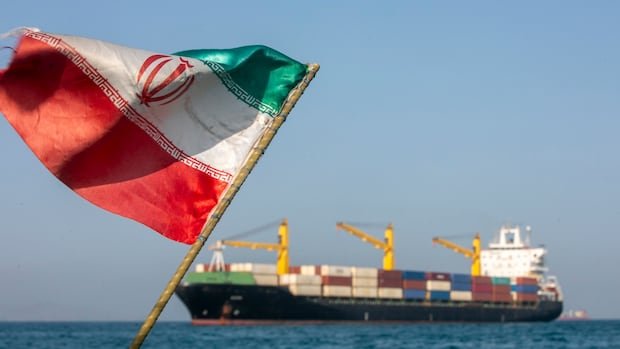

U.S. military forces conducted an operation in the Strait of Hormuz on Sunday by targeting Iranian rocket launchers, marking the first military engagement in over a month. This action disrupted a period of relative calm in the ongoing conflict that has lasted more than six months. Intelligence sources reported that Iran’s Islamic Revolutionary Guard Corps (IRGC) were preparing to deploy rockets armed with sea mines in the strait. The U.S. military had recently cleared sea mines from the international shipping routes in the area.
Reports from semi-official sources in Iran mentioned hearing explosions near Larak Island in the strait. Subsequently, Iranian state television aired footage claiming to show ballistic missiles being launched at U.S. bases in Jordan in retaliation for the American strikes. Jordan’s armed forces intercepted eight missiles that breached the country’s airspace early Monday.
U.S. military officials rejected Iran’s assertion that their actions were aggressive, stating that the strikes were a targeted response against minelaying activities posing a threat to civilian and commercial shipping in the region. They emphasized that the U.S. military’s objective was to safeguard maritime traffic and global commerce in the strait.
The conflict between the U.S. and Iran escalated following the recent military engagements, with concerns arising about the potential repercussions on regional stability. The Trump administration had earlier indicated a shift towards economic pressure tactics rather than direct military intervention to address the conflict with Iran. This strategy includes imposing sanctions on entities engaging in business with Tehran.
As the conflict persists, Trump’s initial goal of swift resolution seems to be fading, with the President indicating a lack of urgency in negotiating with Iran. He highlighted the impact of the joint U.S. and Israeli campaign on Iran’s military capabilities, claiming significant damage inflicted on the country’s navy and air force. Iranian officials estimated losses of $270 billion USD due to the conflict, with Israeli strikes targeting key leadership figures in the early stages of the war.
Despite facing significant military setbacks, Iran continues to wield influence through its control of the critical Strait of Hormuz, a key passage for global oil shipments. The region remains volatile, with disruptions in commercial traffic reported, including an incident where a tanker ship was struck by an unidentified projectile near Khasab, Oman. The vessel was inbound with no casualties or environmental damage reported, and no group immediately claimed responsibility for the attack.