
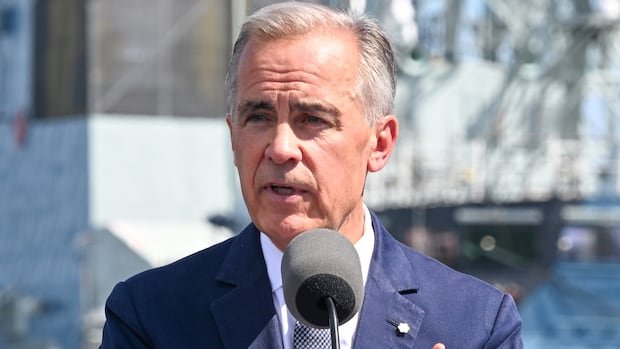

Prime Minister Mark Carney expressed readiness to resume negotiations with the Trump administration once the U.S. demonstrates genuine interest in fostering an economic partnership with Canada. Carney highlighted the importance of a collaborative approach that respects both nations’ industries during his address in Lévis, Que., on Monday. While acknowledging the existing trade agreement between Canada and the U.S. (CUSMA) as beneficial, Carney emphasized the potential for further improvements to benefit all involved. He underscored the necessity for the U.S. to refrain from actions that could harm Canadian businesses and citizens, emphasizing that Canada cannot accept a subordinate role or endure constant challenges at the negotiating table.
Following the introduction of unfavorable “last-minute changes” by the U.S. team during negotiations, Carney announced Canada’s withdrawal from the talks, citing concerns over unfair conditions that could hinder trade agreements with other nations and jeopardize French-language support in Canadian media and product labeling requirements. Subsequently, approximately $28 billion in Canadian exports to the U.S. faced a substantial 50% tariff increase over the weekend.
Regarding the proposed auto deal by the U.S., Carney rejected the terms, emphasizing that it would have a detrimental long-term impact on the industry. President Donald Trump’s announcement of a 50% tariff increase on Canadian automobiles, car parts, and steel further escalated tensions, with Trump declaring that Canada would no longer receive preferential treatment.
In response to Trump’s actions, Carney condemned the U.S.’s unfair negotiation tactics designed to undermine crucial Canadian industries, leading to the breakdown of talks. Discussing potential countermeasures, Ontario Premier Doug Ford suggested imposing electricity surcharges on exports to the U.S. to address the escalating trade disputes. Carney underscored the importance of remaining composed and exploring positive initiatives while highlighting Canada’s significant role as an energy supplier to the U.S.
During his visit to Lévis, Carney announced substantial funding for Quebec’s shipbuilding industry to construct new icebreakers for the Canadian Coast Guard using domestically sourced steel. While emphasizing the need to strengthen the economy, Quebec Premier Christine Fréchette hinted at potential strategies, including imposing surcharges on energy exports, to navigate the evolving trade landscape.
Despite the strained negotiations, Carney reiterated the conditions necessary for Canada to re-engage in talks, while U.S. Vice-President JD Vance indicated ongoing discussions and a commitment to the negotiation process. Vance echoed Trump’s sentiments, criticizing Canada and hinting at a contentious relationship marked by trade disputes and mutual grievances.