

Iran has vowed to retaliate against the newly expanded U.S. sanctions targeting its economy, expressing confidence in its major trading partners’ resistance to Washington’s pressure tactics. Treasury Secretary Scott Bessent unveiled the measures, stopping short of the harshest sanctions, nearly six months into the ongoing conflict that the U.S. has been struggling to resolve.
Despite enduring years of U.S. and international sanctions that have taken a toll on its economy, Iran remains defiant. In response to the economic measures, Iranian Economy Minister Ali Madanizadeh stated that Iran was ready for any potential military action and further reductions in oil exports from the Gulf.
“Enemies should expect an offensive as our defense is no longer purely defensive,” Madanizadeh declared on state television, highlighting that both China and Russia have not endorsed the U.S. sanctions and suggesting that other nations would also resist.
Brig.-Gen. Hossein Mohebbi, a spokesperson for Iran’s Islamic Revolutionary Guard Corps, warned of severe repercussions against U.S. vital interests and energy chokepoints if Iran’s infrastructure is threatened, as reported by Press TV.
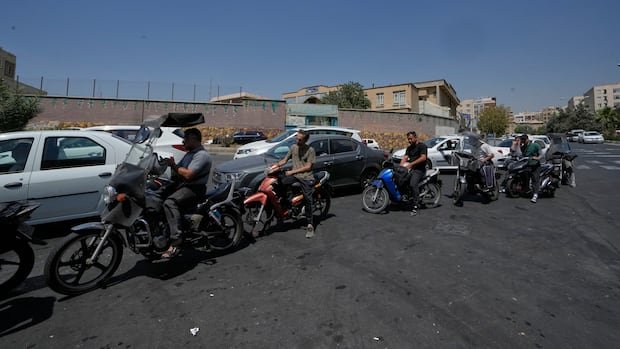
The announcement of the sanctions coincided with Iran’s rial plummeting to a historic low, exacerbated by existing economic challenges such as high inflation and negative growth. Iranians are facing soaring prices of essential goods like rice and beef, with the International Monetary Fund projecting a significant contraction in the country’s GDP.
President Trump’s recent social media post claiming that “IRAN IS COMPLETELY COLLAPSING!!!” starkly contrasts with his earlier assurances of support for Iranian protesters and promises of imminent change in the country’s leadership.
As Iran and the United States signed an interim deal in June to quell the conflict that erupted following U.S. and Israeli attacks, tensions have persisted, leading to renewed hostilities and disruptions in energy exports from the Gulf.
While warning countries trading with Iran of potential exclusion from the dollar-based financial system, Bessent refrained from specifying targets or timelines for compliance, emphasizing a measured approach to enforcement. The Treasury Department imposed new sanctions on individuals, entities, and vessels, excluding Chinese financial institutions allegedly involved in facilitating Iran’s oil trade.
China, a significant purchaser of Iranian oil, emphasized adherence to international law in its dealings with Iran, urging non-interference in their cooperation.
Despite the recent drop in oil prices and a relative lull in hostilities, concerns persist over Iran’s capacity to disrupt global shipping and the unresolved status of its nuclear program. Diplomatic efforts, including mediation by Pakistan to ease tensions and reopen the vital Strait of Hormuz, continue amid the protracted conflict.