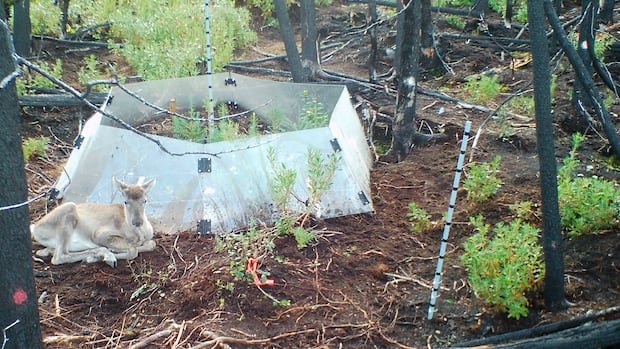
Wildlife in Newfoundland’s wilderness has been causing disruptions to the fieldwork of Lucas Brehaut, a wildfire researcher. Brehaut, from the Canadian Forest Service, is investigating forest regeneration in Atlantic Canada post-wildfires, as forest fires become more frequent in the region. Deploying 19 open-top chambers (OTCs) to study seedlings’ growth, Brehaut faces challenges from various animals, including caribou, moose, bears, wolves, rabbits, and owls damaging his equipment and even stealing temperature sensors. Despite setbacks, Brehaut remains understanding, acknowledging the animals’ curiosity and presence in their habitat. Kaitlyn Gaynor, a professor at the University of British Columbia, explains that animals are naturally inquisitive about new objects in their environment, driven by potential food sources or perceived threats. Animal interference in research is a global issue, with Gaynor sharing experiences from her work in Mozambique, where baboons, hyenas, and elephants have disrupted research activities. While animals pose challenges, Brehaut also mentions human interference, such as snowmobiles damaging research plots in snowy Newfoundland winters.