
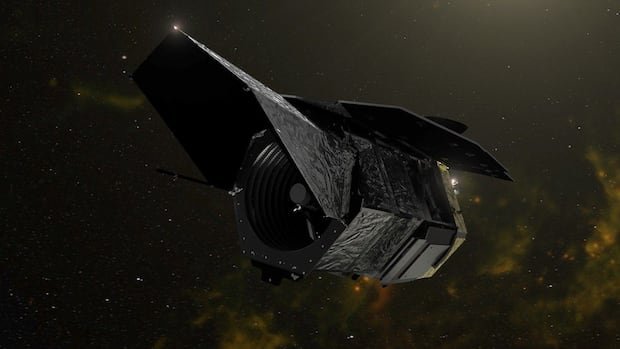

At 7:26 a.m. on Sunday morning, a new space telescope is set to launch from Cape Canaveral, Florida, atop a Falcon Heavy rocket, aiming to unveil fresh insights into our universe. The eagerly awaited Nancy Grace Roman Space Telescope, honoring NASA’s inaugural chief astronomer, is recognized as the “mother of the Hubble Space Telescope.” Following its launch, the telescope will reach an orbit 1.5 million kilometers away at the L2 point, where gravitational equilibrium maintains satellite orbits steadily. The mission is slated for a five-year duration with the potential for extension.
The addition of the Nancy Grace Roman telescope to the existing array of space telescopes, such as the Hubble Space Telescope and the James Webb Space Telescope, is justified by its unique capabilities. Apart from possessing a 2.4-meter mirror akin to the Hubble, the Nancy Grace Roman telescope features a coronagraph for obstructing starlight to expose planets circling distant stars. Moreover, it is equipped with a Wide Field Instrument that matches the sensitivity of the Hubble but can capture images over an area 100 times larger, offering a significant enhancement in observational capability.
The telescope’s advanced camera can discern billions of stars, facilitating diverse sky and stellar surveys. Anticipation is high for the potential discoveries expected from the Nancy Grace Roman telescope. One key focus will be the exploration for other planets beyond our solar system, as astronomers strive to unravel the uniqueness of our planetary system. With over 6,300 confirmed exoplanets to date, primarily discovered by the Kepler Space Telescope, the Nancy Grace Roman telescope aims to significantly expand this number by observing around 100 million stars, unveiling a multitude of transiting exoplanets.
In addition to the transit method, the telescope will employ microlensing to delve deeper into the quest for exoplanets. This technique enables astronomers to detect more Earth-like planets, including those with masses similar to Earth. Another crucial aspect of the telescope’s mission involves investigating dark matter and dark energy, which collectively constitute a substantial portion of the universe. By scrutinizing galaxies and globular clusters, the Nancy Grace Roman telescope will analyze the distribution and quantity of dark matter, shedding light on its elusive nature. Furthermore, the mission will delve into the enigmatic realm of dark energy, which propels the universe’s expansion.
The comprehensive capabilities of the Nancy Grace Roman Space Telescope position it as a pivotal instrument in advancing astronomical research and unveiling the mysteries of the cosmos.