
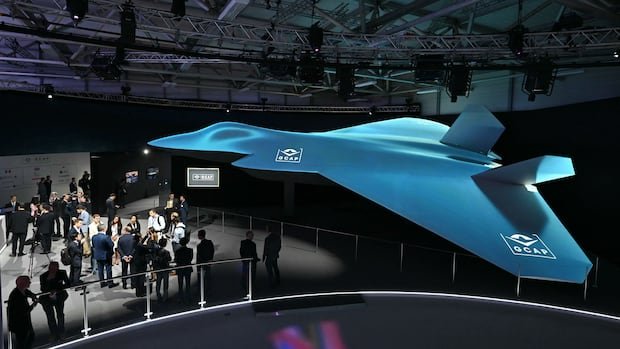

Defence Minister David McGuinty is set to reveal Canada’s involvement in an international initiative to develop advanced stealth fighter jets during an upcoming announcement in the United Kingdom, according to CBC News sources. Canada has agreed to participate in the Global Combat Air Program as an “observer,” joining the U.K., Japan, and Italy in the project aimed at creating a sixth-generation fighter jet by 2035.
Retired lieutenant-general Christopher Coates, a former NORAD commander, highlighted the importance of Canada’s proactive stance in enhancing its defense industry and strategic defense capabilities. He emphasized the necessity of anticipating future defense requirements to avoid falling behind.
Canada is currently reassessing its plan to acquire 88 F-35s from the U.S., which was initiated over a year ago in response to threats and tariffs imposed by U.S. President Donald Trump. Joining the international program for the next generation fighter jet is viewed as a strategic move that complements, rather than replaces, the F-35 procurement plan.
Lt.-Gen. Jamie Speiser-Blanchet, commander of the Royal Canadian Air Force, is in the U.K. for discussions with counterparts from the U.K., Japan, and Italy regarding their fighter jet program. McGuinty is expected to participate in a signing ceremony at the Farnborough International Airshow to formalize Canada’s observer status in the program.
The decision to join the Global Combat Air Program as an observer is seen as a significant initial step that may lead to future collaborations and technology exchanges, providing Canada with advanced capabilities in the long term. The move is not a binding commitment, but rather a strategic partnership to enhance Canadian technological advancements.
Observers likened Canada’s participation to a “first date,” emphasizing the importance of cautious collaboration and mutual understanding among the involved parties. The initiative is seen as a means to strengthen ties with European allies while asserting Canada’s independence in defense decisions, particularly in light of pressure from the U.S. to acquire F-35s.
The program’s focus on interoperability with U.S. advancements and the potential for future aircraft acquisitions were highlighted, signaling a shift towards enhanced defense capabilities and strategic partnerships for Canada. The official stance from the Canadian government remains cautious yet optimistic about the opportunities presented by joining the international fighter jet development program.