
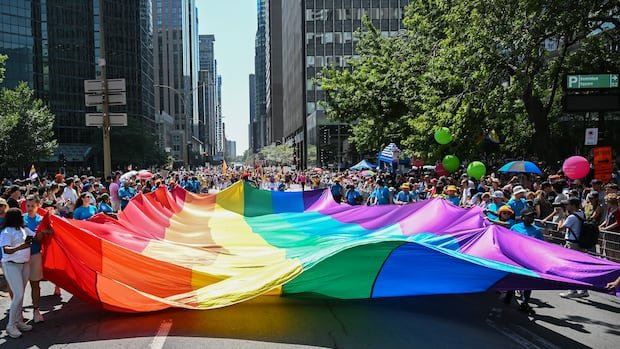

As Quebec celebrates pride month, political candidates from diverse sexual and gender backgrounds gearing up for the upcoming provincial election are raising concerns about a surge in hateful messages directed at them.
Québec solidaire is currently facing an unprecedented wave of online hate towards its 2SLGBTQ+ candidates, described as “exceptional” and “alarming.” Party president Roxane Milot, a candidate in a Montreal riding, emphasized the need for caution among all candidates and party leaders in their public statements.
Milot, who identifies as bisexual, highlighted the detrimental impact of online violence on marginalized candidates, stating that it discourages individuals from diverse backgrounds from participating in politics. She noted a concerning trend where persuading individuals from queer, women, or racialized backgrounds to run for office has become increasingly challenging.
The issue of online hate gained attention when one of Québec solidaire’s candidates, Vanessa Durand, withdrew from the election after making derogatory comments online towards Parti Québécois supporters from the 2SLGBTQ+ community. Durand subsequently apologized and retracted her candidacy.
Philippe Schnobb, a Parti Québécois candidate, disclosed that he regularly receives homophobic messages, including recent threats. Schnobb, who also identifies as part of the sexual and gender diverse community, expressed discomfort with the increase in derogatory comments since entering politics.
Despite facing intolerable remarks and threats online, Schnobb refrains from pursuing legal action at the moment, emphasizing the need to remain cautious and composed in the lead-up to the election.
Liberal Leader Charles Milliard, who is openly gay, addressed the issue of electing a gay premier in Quebec, asserting the importance of transparency and not concealing one’s identity in public service. He condemned homophobic remarks directed at him on the International Day Against Homophobia and Transphobia.
Not limited to a single party, homophobic and transphobic comments pose a challenge for all major political parties, according to Philip Laflamme, a senior adviser for content and communications at the Liberal party.
The Coalition Avenir Québec Leader’s communications director acknowledged the prevalence of online attacks against candidates and assured that the party is closely monitoring social media accounts to address such assaults.
Despite receiving hateful comments online, Quebec Conservative Party Leader Éric Duhaime, who is openly gay, opts not to amplify the negativity. Political parties have adapted to the rise in online violence by providing support structures and training sessions for candidates to handle hostile situations effectively.